
EngageLab Review 2026: An AI-First Customer Engagement Platform Put to the Test
EngageLab is an AI-first customer engagement platform from Aurora Mobile (NASDAQ: JG). It combines omnichannel messaging — email, SMS, push notifications, and WhatsApp among them — with AI agents that can send, receive, and act on customer replies. This review examines what the platform actually does, who benefits most, where it falls short, and how to decide whether it belongs in your stack.
What EngageLab Is and Who It Serves
First viewport screenshot of www.engagelab.com.
EngageLab positions itself as a unified platform for customer engagement rather than a single-channel sender. Its differentiator is the agent layer: AI agents that operate across the message lifecycle, not just at the drafting stage.
The most concrete example is Agent Email, announced by Aurora Mobile in October 2026. Agent Email provides receive, send, and manage infrastructure for AI agents. When a customer replies to a campaign, an inbound gateway captures the message, converts it to structured text, and threads multi-turn conversations using standard email headers (Message-ID, In-Reply-To, References) so replies stay grouped in Gmail and Outlook. Agents can ground answers in a private knowledge base and push structured summaries and intent signals into CRM systems.
That design points to three groups of ideal users:
- Lifecycle marketing teams that want to close the reply loop on welcome, renewal, and cart-recovery emails instead of treating sends as one-way broadcasts.
- Growth and technical teams entering overseas markets that need a zero-configuration cold-start option via a shared sending domain before investing in DNS, SPF, DKIM, and DMARC setup.
- Support and sales organizations that need 24/7, cross-time-zone response grounded in internal documentation.
Small teams with a single channel and no automation ambitions will likely find the platform broader than necessary. The value concentrates where multiple channels and inbound reply handling matter.
Core Capabilities: What Stands Out
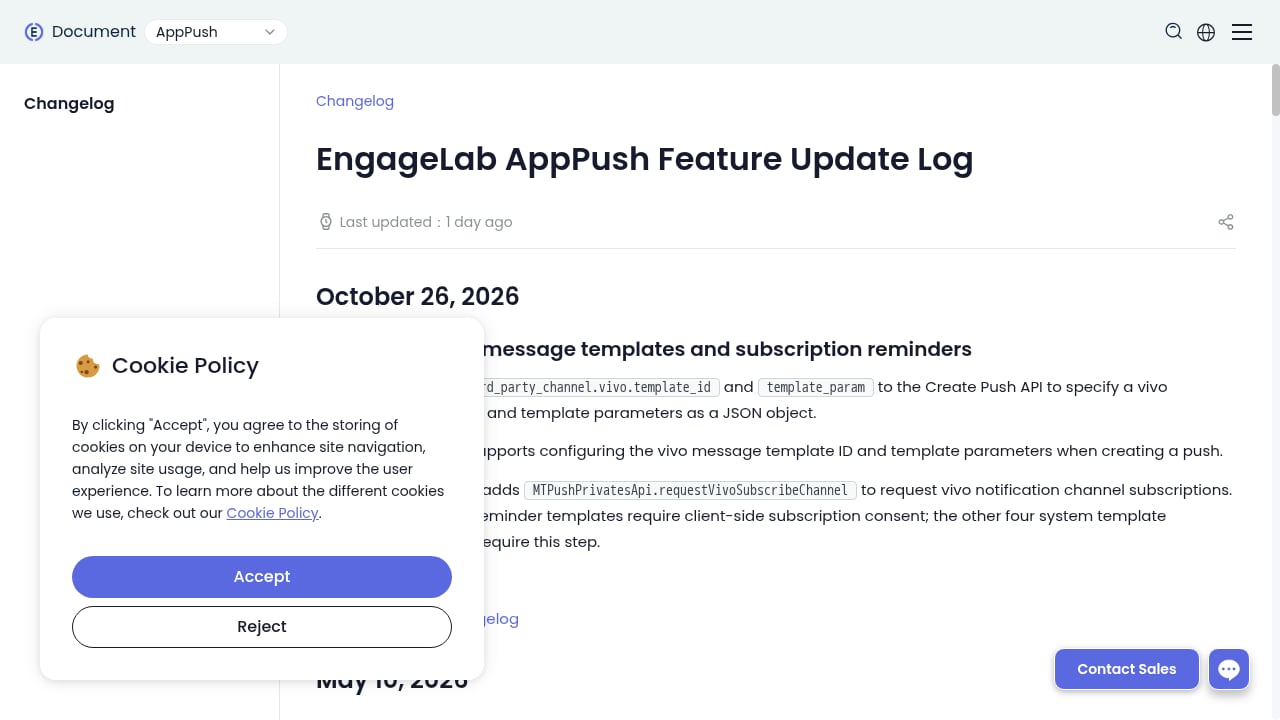
First viewport screenshot of www.engagelab.com.
Agent Email and the Post-Send Gap
Most AI email tools stop at message generation. EngageLab's stated focus is the part after the send button: deliverability, inbound replies, intent detection, and follow-up. For teams running lifecycle campaigns, this is the most differentiated capability in the product.
Omnichannel Messaging in One Place
A hands-on review frames EngageLab as a way to avoid managing separate tools for email, SMS, push notifications, and WhatsApp. Consolidation reduces integration overhead and gives teams a single view of engagement activity — a meaningful operational benefit for cross-border businesses juggling regional channels.
Developer-Friendly Agent Infrastructure
Agent Email is described as natively compatible with leading AI developer tools, including Codex, Cursor, Claude Code, OpenClaw, and Hermes. This matters if your team wants to build agents on its own stack rather than adopt a closed, no-code-only workflow.
Shared Domain vs. Custom Domain
EngageLab supports a high-reputation shared sending domain for teams without DNS and authentication resources, plus custom domains, with an upgrade path between them. That is a practical on-ramp for new market entrants, though serious senders should plan to move to a custom domain for brand consistency and deliverability control.
Limitations and Open Questions
First viewport screenshot of www.engagelab.com.
- Pricing transparency. Public review listings such as G2 provide product details and user feedback, but exact plan pricing is typically quote-based. Budget-conscious buyers should request tiered quotes before committing.
- Agent Email is new. The capability launched in late 2026. Independent, long-term evidence on reply-handling accuracy at scale is still limited, so pilot before rolling out broadly.
- Breadth requires governance. Running email, SMS, push, and WhatsApp from one platform is convenient, but it also concentrates consent, suppression, and compliance management in a single system. Teams need clear ownership.
- Shared domain trade-offs. The shared domain lowers setup friction but may not suit established brands that need full control over sender reputation.
Pricing Signals
EngageLab does not publish a simple self-serve price list in the sources reviewed. Expect quote-based pricing that scales with message volume, channel mix, and agent usage. When evaluating proposals, ask for:
- Per-channel volume tiers and overage rates
- Whether Agent Email inbound handling is metered separately
- Costs for custom domain setup and dedicated IPs
- Contract length and exit terms
For context on how engagement platforms typically price, see our comparison of the top 10 AI customer experience and contact center platforms, which evaluates vendors on AI resolution, channels, integrations, and pricing.
Setup and Time to Value
The fastest path is the shared sending domain: teams without DNS or authentication resources can start outreach without configuring SPF, DKIM, or DMARC. From there, a sensible rollout looks like this:
- Connect your primary channel (usually email) and import your contact base with consent records.
- Configure a lifecycle campaign — a welcome or cart-recovery flow — and enable reply capture.
- Ground the AI agent in your knowledge base and test replies against real historical questions.
- Push intent signals into your CRM and verify the field mapping.
- Migrate to a custom domain once volume and brand requirements justify it.
Expect the technical setup to be manageable for a developer-literate team; the harder work is content and knowledge-base quality, which determines answer accuracy.
EngageLab vs. the Alternatives
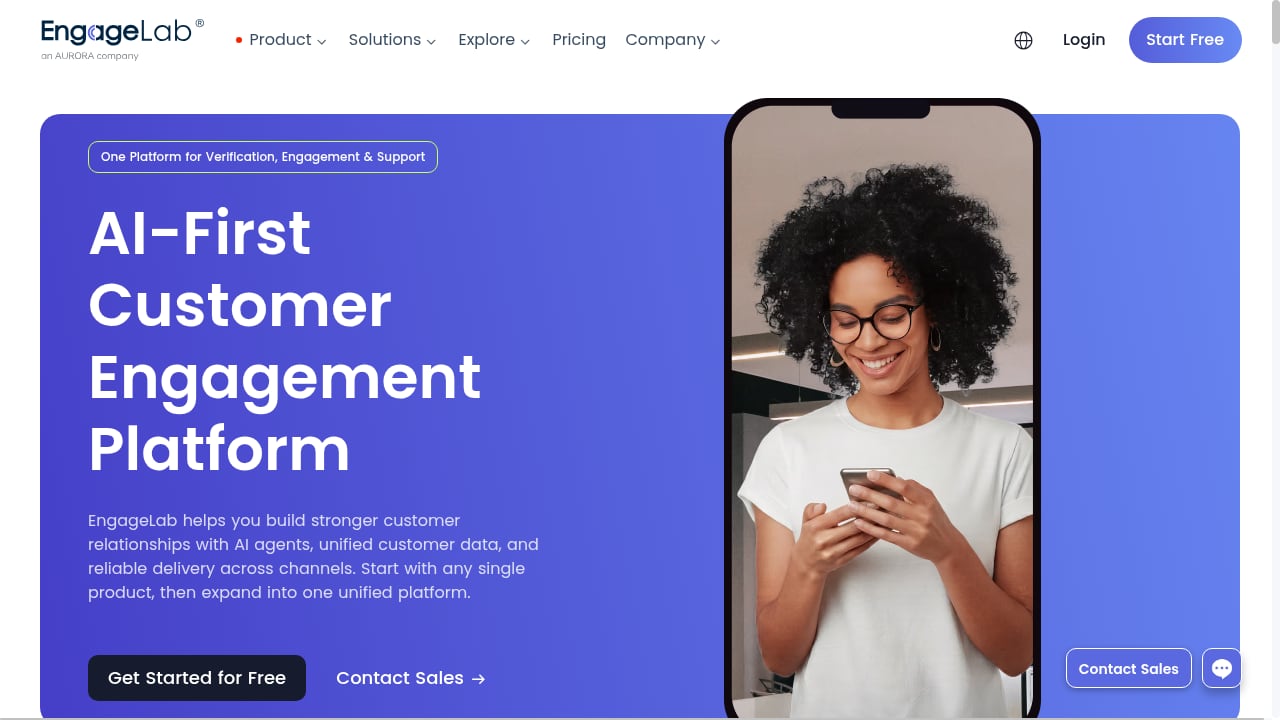
First viewport screenshot of www.engagelab.com.
EngageLab competes less with single-channel senders and more with omnichannel CRM and customer experience suites. If your priority is a unified inbox with human-AI collaboration across chat channels, a dedicated customer service system may fit better — our SaleSmartly vs. Kommunicate vs. Pylon comparison covers channel coverage, human-AI handoff, and pricing for cross-border operations. If you are assembling a broader stack, the top 10 AI omnichannel CRM and CX platforms for 2026 provides a side-by-side view.
Choose EngageLab when agent-driven reply handling and multi-channel lifecycle messaging are central to your strategy. Choose a contact-center-first suite when voice, ticketing, and agent desktop workflows dominate.
Decision Criteria Checklist
Before buying, confirm:
- Channel fit: Does EngageLab cover the channels your customers actually use in each market?
- Reply-loop need: Will you use inbound agent handling, or only outbound sends?
- Developer capacity: Can your team work with agent infrastructure and CRM field mapping?
- Compliance: Can the platform handle consent and suppression rules across regions?
- Pricing model: Are volume tiers and agent usage predictable at your scale?
- Migration path: Is moving from the shared domain to a custom domain straightforward?
Related reading
- SaleSmartly and Voyado Synergy: A Practical Guide to Cross-Border Retail Customer Service and Product Discovery - Explains how SaleSmartly's omnichannel customer service system and Voyado's retail AI platform work together, covering integration ideas, configuration steps, practical scenarios, and FAQs to help cross-border retailers connect customer service and product discovery, boosting conversion and repeat purchases.
- SaleSmartly vs Gallabox: A Cross-Border Customer Service System Selection Guide - Compare SaleSmartly and Gallabox across channel coverage, human-AI collaboration, customer operations, pricing, and use cases to help cross-border businesses choose the online customer service system that best fits their operations.
FAQ
What is EngageLab?
EngageLab is an AI-first customer engagement platform from Aurora Mobile that combines omnichannel messaging with AI agents capable of handling inbound customer replies.
What is Agent Email?
Agent Email is EngageLab's infrastructure that lets AI agents receive, understand, and answer inbound email at scale, keeping conversations threaded in Gmail and Outlook and writing intent signals back to CRM.
Who should use EngageLab?
Lifecycle marketing teams, cross-border growth teams, and support or sales organizations that need automated, knowledge-grounded replies across time zones benefit most.
Does EngageLab publish pricing?
Pricing is generally quote-based. Ask for channel volume tiers, agent usage fees, and custom domain costs before signing.
Can I start without DNS setup?
Yes. EngageLab offers a shared sending domain for teams without DNS, SPF, DKIM, or DMARC resources, with an upgrade path to a custom domain.
Conclusion
EngageLab's strongest claim is that engagement does not end at the send button. Agent Email and its omnichannel foundation make it a credible choice for teams that want AI agents to manage the full conversation loop — provided they pilot the newer agent features, clarify pricing, and plan their domain and compliance strategy. For organizations where outbound volume alone is the priority, simpler tools may suffice; for those building conversational, multi-channel engagement, EngageLab deserves a shortlist spot.