
Salesforce Agentic CRM Review: Agentforce, Use Cases & Verdict
Salesforce is rebranding its entire Customer 360 platform as the world’s first Agentic CRM. At its heart lies Agentforce – a suite of autonomous AI agents that sit directly on top of your Salesforce data and automate tasks across sales, service, marketing, and commerce. This review examines what Agentforce actually does, who should adopt it, where it shines, and where it still trips.
Ideal Users and Common Use Cases
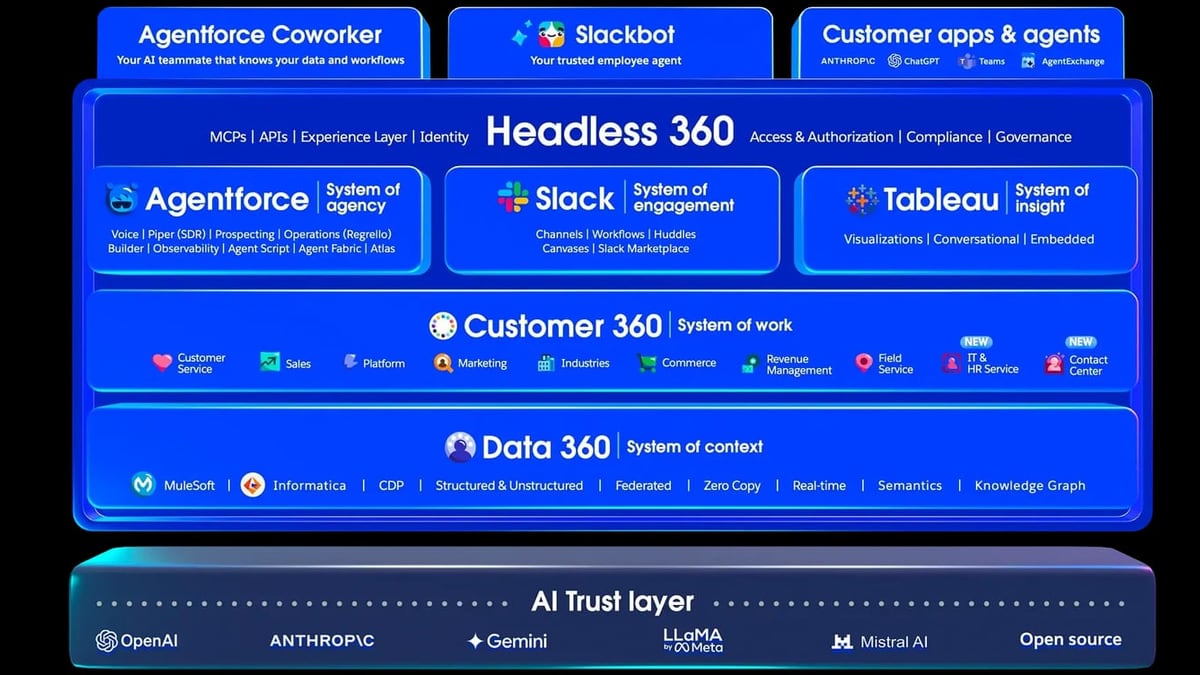
Salesforce Agentic CRM Review: Agentforce, Use Cases & Verdict product interface and feature overview.
Agentforce isn't one-size-fits-all. The platform targets organizations that already rely heavily on Salesforce and have clean, well-structured Customer 360 data.
- Sales teams use the Sales Development Representative (SDR) agent to engage inbound leads autonomously: sending follow-up emails, answering questions, and booking meetings without human handoffs. A real-world proof point: Vercel saved over 70,000 meeting hours by deploying Slack-based agents that qualified leads while teams slept.
- Service departments deploy the Service Agent to resolve common customer inquiries across chat, email, and messaging – deflecting tickets before they reach a human, while pulling answers directly from knowledge articles and case history.
- Marketing operations rely on the Campaign Agent to generate audience segments, draft campaign briefs, and orchestrate multi-step nurture sequences using natural language prompts. Einstein copilot then suggests the next best action for each customer dynamically.
- Retail and commerce teams can activate the Personal Shopper Agent to give shoppers conversational product recommendations grounded in inventory and purchase history.
In short, if your workflows are already digitized within Salesforce Clouds (Sales, Service, Marketing, Commerce), Agentforce gives you pre-built agents that fit those workflows – not generic chatbots.
Strengths: What Agentforce Gets Right
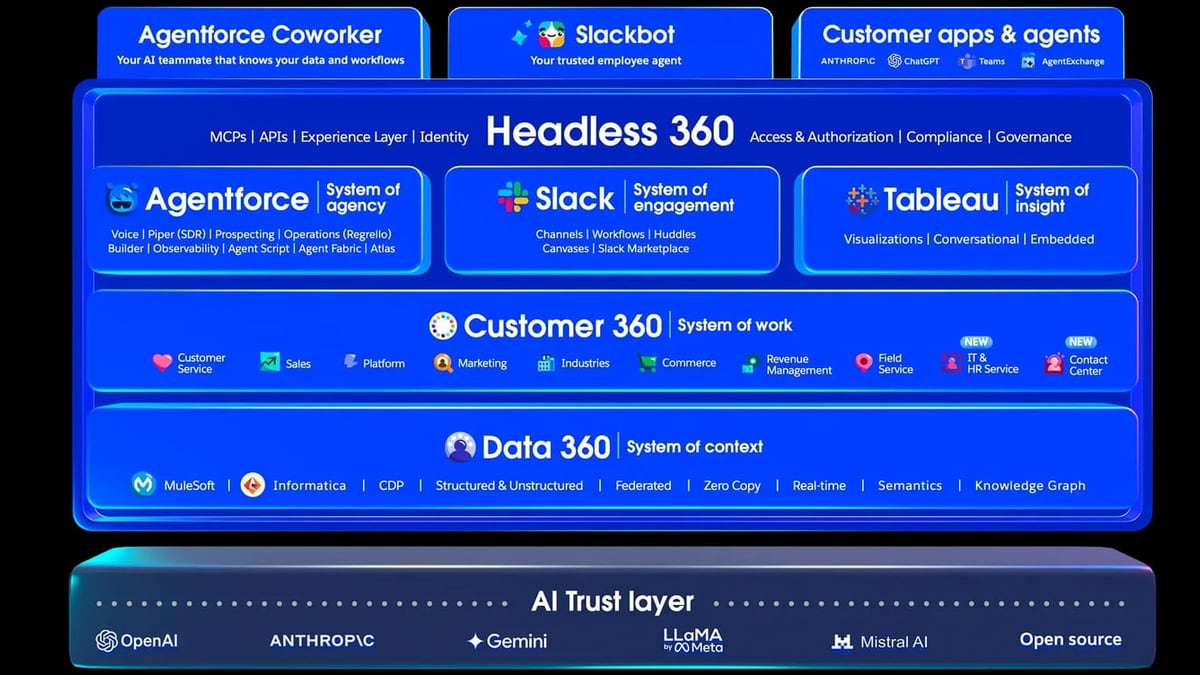
Salesforce Agentic CRM Review: Agentforce, Use Cases & Verdict product interface and feature overview.
Unified Data Foundation
The platform’s biggest advantage is its native access to Customer 360. Because agents are grounded in your CRM records, interactions become context-aware. As early hands-on reviews noted, agents can answer “Has this customer already ordered?” or “What’s the latest case status?” without complex external integrations.
Purpose-Built, Specialized Agents
Unlike generic AI copilots, Agentforce agents come with role-specific reasoning built in. Users on G2 consistently praise how closely the SDR agent mirrors a real BDR’s workflow – it handles objections, routes hot leads, and updates records. The out-of-the-box agents reduce build time from weeks to hours.
Trust, Security, and Guardrails
Salesforce layers its agent runtime with Einstein Trust Layer: zero-retention prompts, toxicity filters, and audit trails. Customers can test agents in secure sandboxes before deployment, set conversational boundaries, and define exact topics an agent may handle. Signature Success Plan customers report an 83% ROI, partly because the governance model reduces compliance risks.
Ecosystem and Extendability
AgentExchange, a partner marketplace, lets businesses discover pre-trained skills for niche verticals. Slack integration makes agents omnipresent where employees already work. And the Trailblazer Community, IdeaExchange, and Success Plans offer human guidance to avoid building agents blindly.
Limitations and Caveats
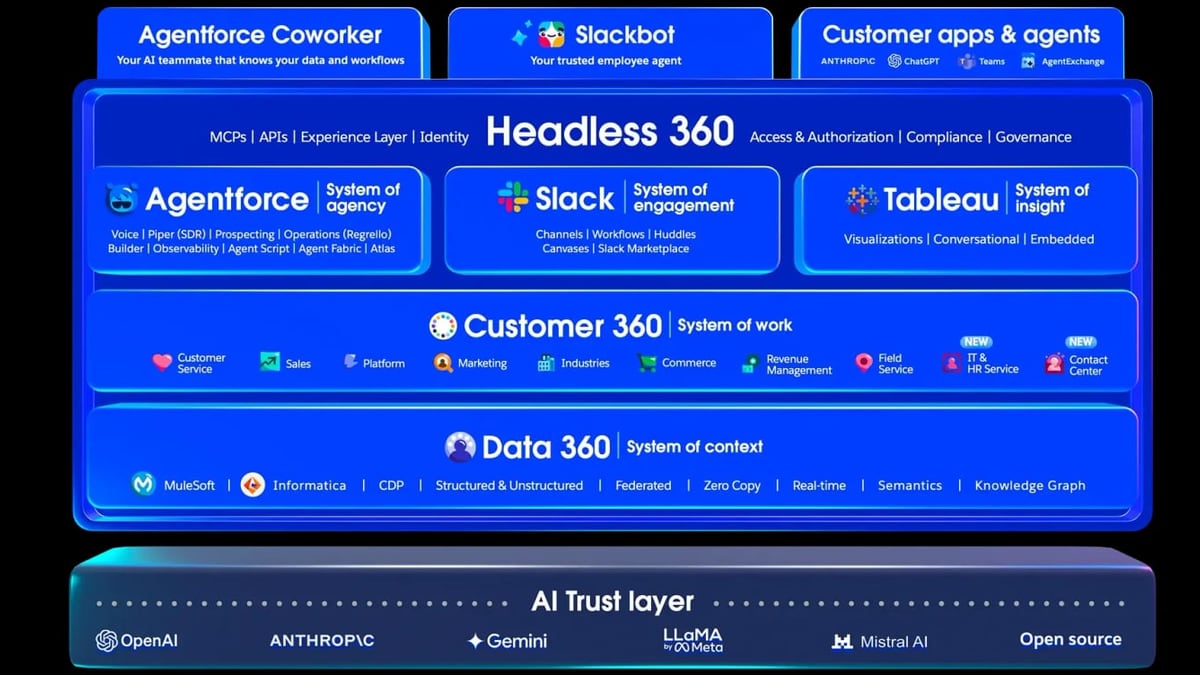
Salesforce Agentic CRM Review: Agentforce, Use Cases & Verdict product interface and feature overview.
“As Good as Your Data” Is a Hard Wall
Real-world Reddit conversations reinforce the blunt truth: if your CRM data is incomplete, inconsistent, or siloed, agents will confidently deliver wrong answers. Grounding relies on precise, up-to-date records. Several practitioners note that poor data hygiene is the #1 source of early project failure, not the AI itself.
Pricing Uncertainty and Add-On Costs
Agentforce pricing is consumption-based, layered on top of existing Salesforce licenses. Salesforce hasn’t published straightforward per-conversation or per-agent seat pricing, making it hard to forecast costs. Adopters must budget for extra Einstein generative AI credits, sandbox environments, and potentially a dedicated admin. For SMBs or teams with erratic volumes, the lack of a capped entry-level tier can sting.
Steep Learning Curve for Customization
While pre-built agents are quick to configure, truly differentiating an agent (custom prompt templates, retrieval-augmented generation sources, multi-step logic) requires familiarity with Prompt Builder, Flow, and Apex. Non-technical admins may feel overwhelmed when straying from the happy path.
Employee and Customer Adoption Friction
Some customers are suspicious of fully autonomous agents. Salesforce’s own solution – letting agents hand off to humans gracefully – works, but building that handoff logic demands thoughtful design. Additionally, internal teams accustomed to classic dashboards may resist ceding routine tasks to an AI that lacks human nuance.
Pricing and Licensing Signals
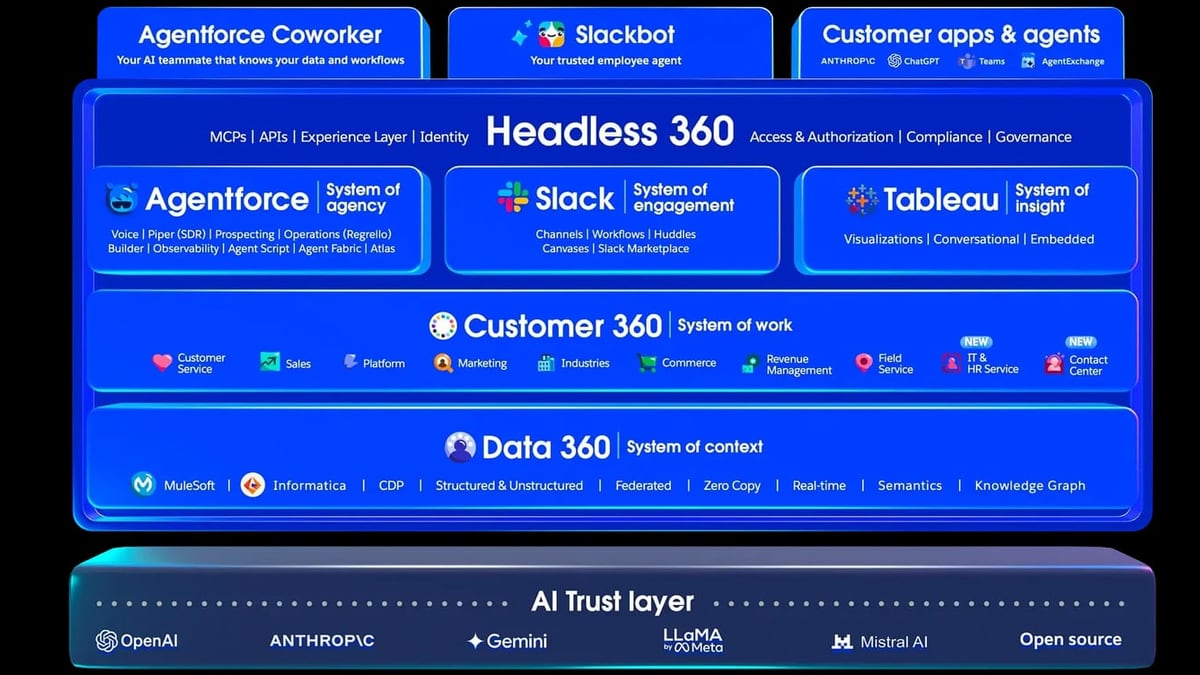
Salesforce Agentic CRM Review: Agentforce, Use Cases & Verdict product interface and feature overview.
Agentforce is bundled with Salesforce Unlimited and Einstein editions, but consumption fees apply for each agent interaction. Key signals:
- Base Salesforce license (Enterprise or Unlimited) is required; Agentforce is not sold standalone.
- Einstein Generative AI credits fuel the agents; volume discounts are available for high-interaction workloads.
- Signature Success Plans add advisory hours, implementation support, and sandbox capacity – directly tied to the 83% ROI figure.
- AgentExchange skills may carry separate partner licensing.
For a mid-market company with a few thousand monthly automated conversations, expect Agentforce costs to add 20-35% on top of existing CRM spend after initial ramp. Obtaining a formal quote requires direct engagement with an account executive – a transparency gap worth noting.
Setup and Onboarding Experience
Activating your first agent can be startlingly fast. An admin picks a standard agent type (e.g., Service Agent), connects a knowledge base, sets a topic boundary, and deploys to a sandbox in under an hour. The Agent Builder wizard walks through training data sources, tone-of-voice sliders, and fallback routing rules.
However, production readiness is a longer journey:
- Data preparation: Clean, deduplicate, and enrich records; map custom fields.
- Testing and refinement: Run simulations, review agent transcripts, adjust topics.
- Ethics and legal review: Define what agents may not say, implement consent paths.
- Change management: Train staff to handle escalations, monitor agent dashboards.
Salesforce’s Success Plans and Trailblazer Community help de-risk these steps – but organizations without dedicated Salesforce admin resources may outgrow the quick-start phase quickly.
Key Decision Criteria: Is Agentforce Right for Your Business?
Choose Agentforce if:
- You already run core operations on Salesforce (Sales Cloud, Service Cloud, etc.) and have invested in data quality.
- You handle high volumes of repetitive, data-lookup-heavy interactions (lead qualification, order status, FAQ tickets).
- Your leadership is committed to AI governance and is willing to fund a consumption-based model.
- You can dedicate a Salesforce admin or consultant to continuous tuning.
Think twice if:
- Your CRM data lives in multiple disconnected systems without a unified Customer 360.
- You’re a small business with a modest budget and unpredictable interaction volumes – the pricing model may overrun.
- You need an agent that handles complex, deeply emotional customer conversations (e.g., medical, legal advice) where a human touch is non-negotiable.
When comparing Salesforce to other AI-enabled CRM options, platforms like SaleSmartly can help you stack features side by side and evaluate total cost of ownership against your specific use-case.
FAQ
How much does Agentforce cost?
Costs combine existing Salesforce licenses, consumption-based generative AI credits, and optional Success Plan fees. There’s no public menu pricing; you’ll need to negotiate a quote based on projected agent conversations per month.
Is Agentforce only for large enterprises?
Not exclusively, but the optimal sweet spot is mid-market to enterprise. Small businesses may find the minimum license commitment and administration overhead disproportionate unless they already run a mature Salesforce org.
What data do I need to make agents work?
Accurate, complete Customer 360 records (accounts, contacts, cases, knowledge articles, opportunities) are essential. If your data is scattered or riddled with duplicates, expect agents to fail gracefully.
Can I build a custom agent without coding?
The setup wizard and Prompt Builder allow non-technical admins to create agents for standard use cases. Truly tailored logic, however, often requires Flow automation or Apex code – so plan on some developer support for advanced needs.
How does Agentforce compare to a standalone AI chatbot?
Unlike generic bots, Agentforce is deeply embedded in your CRM data and business processes, providing context-aware, action-oriented responses (e.g., updating a deal stage, creating a case) rather than just retrieving text. The tradeoff is that you need to be on the Salesforce platform.
Conclusion
Salesforce Agentic CRM – embodied by Agentforce – delivers on its promise: autonomous, specialized agents that augment human teams without forcing a rip-and-replace of existing CRM workflows. The combination of vertical-specific templates, trust guardrails, and the Customer 360 data advantage is hard to replicate with point solutions.
Yet the “agentic” vision isn’t a magic wand. Success leans heavily on data hygiene, thoughtful change management, and a clear-eyed acceptance of consumption-based pricing uncertainty. For companies already committed to the Salesforce ecosystem and willing to invest in governance, Agentforce is a genuine productivity leap. For everyone else, it’s a powerful reminder that the best AI starts with clean data – and a realistic roadmap.