
Top 10 AI Customer Support Automation Platforms 2026
Support leaders in 2026 face a familiar squeeze: ticket volume grows faster than headcount, and customers expect instant, accurate answers on every channel. AI customer support automation platforms promise to close that gap, but they differ wildly in how much they actually resolve, how they bill, and how quickly they go live.
This ranking covers ten platforms that genuinely belong to the AI customer support automation category. It excludes adjacent tools that solve different problems. Each entry is evaluated on the same criteria, with evidence drawn from vendor documentation, published pricing pages, and credible third-party comparisons.
How We Evaluated These Platforms
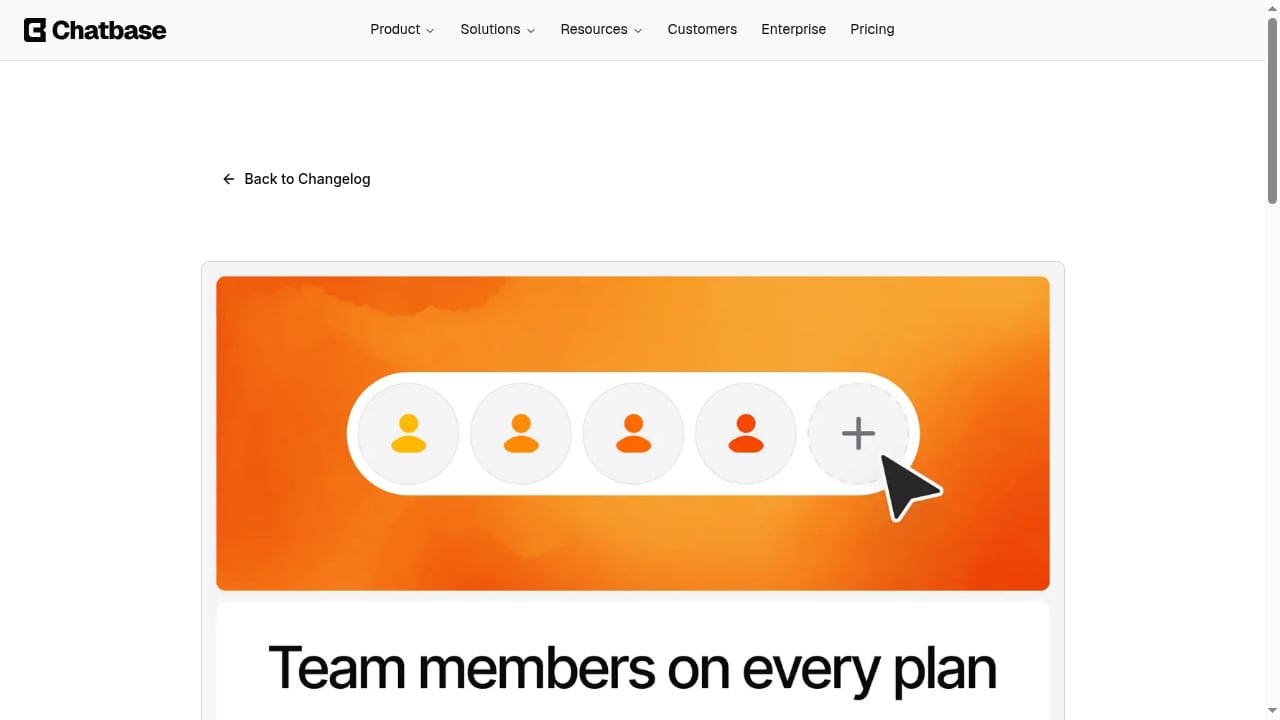
First viewport screenshot of Add Team Members on Any Plan.
We scored each platform on five dimensions:
- Resolution depth. Does the AI close tickets end to end, or only draft replies for agents? A tool that takes actions (refunds, order edits, subscription changes) reduces headcount dependency; a tool that suggests replies reduces handle time.
- Architecture. Is the AI built into a helpdesk, or does it layer on top of the helpdesk you already run? This single split explains most setup and pricing differences.
- Pricing model and total cost. Per seat, per resolution, per conversation, per outcome, or fixed monthly. We modeled realistic ticket volumes rather than sticker prices.
- Time to value. Days, weeks, or a quarter-long implementation.
- Channel coverage and compliance. Chat, email, voice, social messaging, and the certifications regulated teams require.
We prioritized platforms with verifiable pricing signals or published case evidence. Where vendors are sales-led only, we relied on their documentation, security pages, and user reports.
The 2026 Top 10 AI Customer Support Automation Platforms
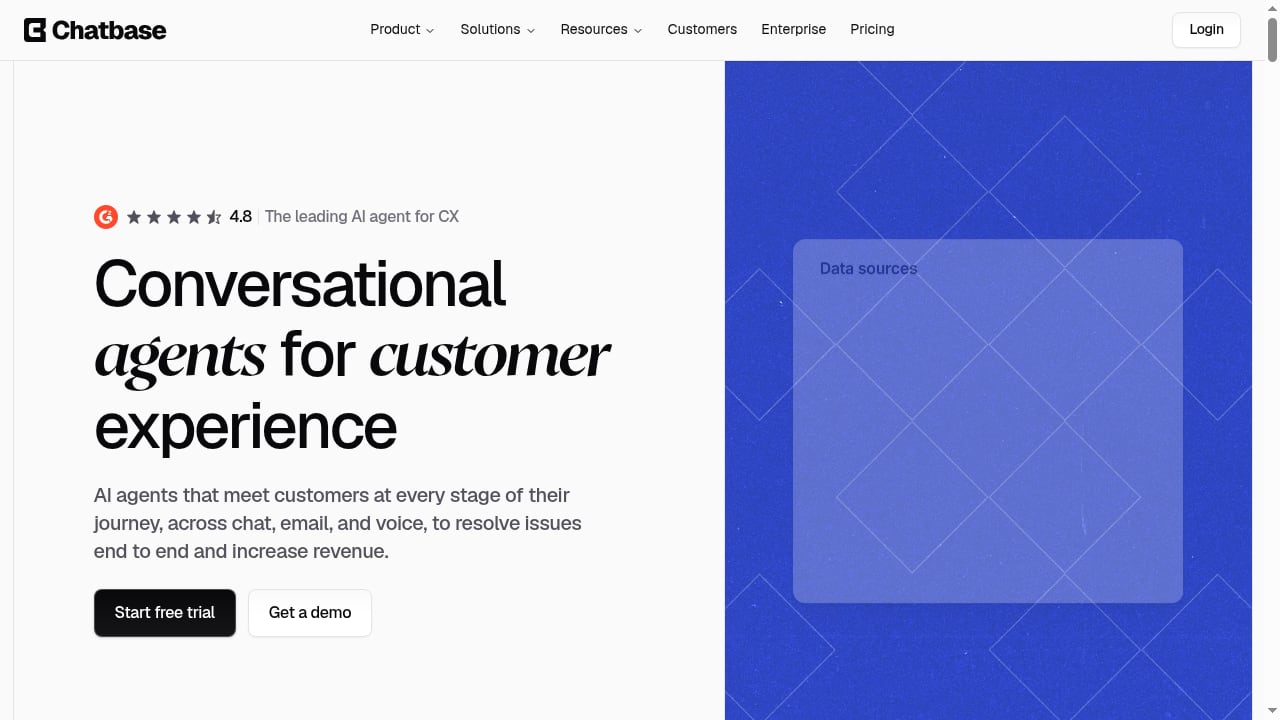
First viewport screenshot of AI Agents for Customer Experience & Support | Chatbase.
1. Zendesk AI
Best for: Large support teams already running Zendesk.
Zendesk AI bundles AI agents, Copilot, and intelligent triage into the helpdesk many enterprises already use. Because the AI is native to the platform, there is no migration and no separate integration layer. Zendesk's published pricing signals show an AI add-on of roughly $19 per agent per month plus $1.50 to $2.00 per automated resolution, which means costs scale with automation volume rather than seat count alone.
The trade-off is that Zendesk AI works best when you are fully committed to the Zendesk ecosystem. Teams running multiple helpdesks or wanting a standalone AI layer may find the per-resolution model harder to predict at high volume. For a deeper look at strengths and limits, see our Zendesk review for 2026.
2. Salesforce Service Cloud (Agentforce)
Best for: Enterprises that run on Salesforce CRM.
Agentforce agents use full CRM data, which means they can personalize responses based on purchase history, account status, and open opportunities. That context is the platform's real differentiator: the AI knows who the customer is before the conversation starts. Pricing signals indicate a Starter Suite from $25 per user per month, with Agentforce billed at $2 per conversation or via Flex Credits.
The limitation is the same as its strength. If your customer data does not live in Salesforce, the context advantage disappears, and you are paying enterprise prices for a generic AI layer.
3. Intercom (Fin)
Best for: Chat-first SaaS and ecommerce teams.
Fin is Intercom's AI agent, and it is designed for autonomous resolution rather than agent assistance. Intercom publishes a per-resolution pricing model starting from $39 per seat per month, with AI agent charges tied to resolutions. That alignment matters: you pay when the AI actually closes a conversation.
Intercom's strength is its conversational quality and its native chat experience. Its limitation is that email and voice support are less mature than its chat offering, so teams with heavy email volume may need a complementary tool.
4. Freshdesk (Freddy AI)
Best for: Small and mid-sized teams on Freshworks.
Freddy AI Agent and Copilot are built into Freshdesk, with pricing signals around $19 per agent per month annually plus $49 per 100 AI sessions after the first 500. There is a free plan for very small teams, which makes Freshdesk one of the most accessible entry points in this category.
The trade-off is resolution depth. Freddy AI is stronger at assisting agents and handling routine queries than at autonomously completing complex, action-heavy tickets. Teams with high volumes of order edits or refunds may outgrow it.
5. Gorgias AI
Best for: Shopify and ecommerce brands.
Gorgias pulls live order data into every ticket, which lets its AI Agent read and edit orders, issue refunds, and answer product questions with real context. Pricing signals start from $10 per month for 50 tickets, plus $0.85 to $1.00 per automated interaction.
For Shopify merchants, the native order integration is the deciding factor. For brands on other commerce platforms, the advantage is smaller, and the per-interaction cost can add up quickly during peak seasons.
6. Chatbase
Best for: Teams that want a branded AI agent grounded in their own content.
Chatbase is an AI customer experience platform for building and deploying AI agents that resolve complex support queries. Founded in 2023 by Yasser Elsaid, it positions itself as the AI customer support platform for over 10,000 businesses. Its agents are designed to reduce ticket volume across every channel by resolving complex queries, and the platform supports conversational AI, customer support automation, AI chatbots, and natural language processing.
A distinctive feature is the branded Agent Page, which acts as a front door to documentation, delivering real-time AI answers trained on a company's content, with quick links and custom instructions. The platform supports large knowledge bases, with agent size limits increased to 33 million characters. Operational controls include automated test conversations to verify agent behavior, A/B testing to gradually roll out agents to website visitors, agent-level permissions, audit logs for enterprise users, and a trust portal. Chatbase integrates with multiple AI models including DeepSeek, OpenAI o3, Gemini 2.0, and Cohere. Team members can be added on any plan, and Backstage provides an AI-powered operations center to manage agents through conversation from the Chatbase dashboard, Slack, or iMessage.
Chatbase fits teams that want a content-grounded AI agent without adopting a full helpdesk. Teams that also need omnichannel messaging and CRM may pair it with a platform like SaleSmartly, which unifies channels such as WhatsApp, Instagram, and email alongside AI-assisted service and SCRM.
7. Ada
Best for: Large consumer brands with high conversation volume.
Ada is a standalone AI platform that sits across chat, email, and voice, with playbooks that define how the AI handles each scenario. It is sold through sales teams on custom contracts, which means pricing is opaque until you engage.
Ada's strength is scale and multilingual coverage for consumer-facing brands. Its limitation is time to value: implementation is measured in weeks or quarters, not days, and smaller teams may find the enterprise sales process disproportionate to their needs.
8. Sierra
Best for: Enterprises that want outcome-based pricing.
Sierra builds AI agents from standard operating procedures and offers voice support alongside chat. Its pricing is custom and outcome-based, meaning you pay when the AI achieves a defined result.
That model aligns incentives well, but it also requires clear definitions of what counts as an outcome. Sierra is a strong fit for enterprises with well-documented processes and the legal resources to negotiate outcome definitions.
9. Decagon
Best for: AI-first, high-volume CX teams.
Decagon uses natural-language agent logic, which it calls AOPs, across channels. Pricing is custom, per conversation or per resolution. The platform is designed for teams that want to build AI-first support operations rather than bolt AI onto an existing helpdesk.
For a detailed breakdown of capabilities and limits, see our Decagon review for 2026.
10. Kustomer
Best for: High-volume online retail teams.
Kustomer combines CRM and AI in one platform, with an AI agent that takes actions on a single customer timeline. Pricing signals include custom plans plus $0.60 per engaged AI conversation.
The CRM-first architecture is a real advantage for retail teams that need a unified customer view. Teams that already have a CRM may find the overlap redundant. For a direct comparison with an omnichannel alternative, see SaleSmartly vs Kustomer.
Quick Comparison: Which Platform Fits Your Team?
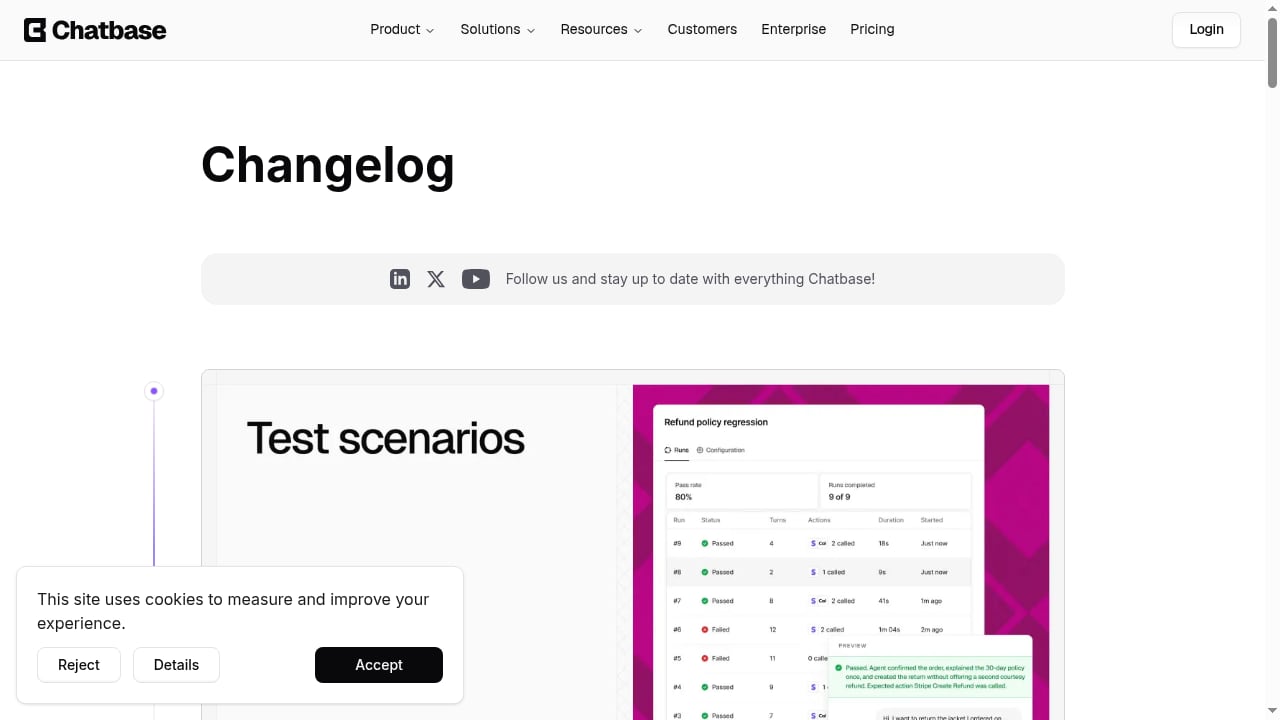
First viewport screenshot of Changelog - Chatbase.
| Platform | Best for | Pricing signal | Resolution approach |
|---|---|---|---|
| Zendesk AI | Zendesk enterprises | ~$19/agent/mo + $1.50–$2.00 per resolution | AI-assisted + autonomous |
| Salesforce Agentforce | Salesforce CRM shops | From $25/user/mo; $2 per conversation | Autonomous with CRM context |
| Intercom (Fin) | Chat-first SaaS | From $39/seat/mo + per resolution | Autonomous |
| Freshdesk (Freddy AI) | SMBs on Freshworks | $19/agent/mo + $49 per 100 AI sessions | AI-assisted |
| Gorgias AI | Shopify brands | From $10/mo + $0.85–$1.00 per interaction | Autonomous with order actions |
| Chatbase | Content-grounded AI agents | Plan-based, team members on any plan | Autonomous, knowledge-grounded |
| Ada | Large consumer brands | Custom (contact sales) | Autonomous across chat, email, voice |
| Sierra | Outcome-based enterprises | Custom, outcome-based | Autonomous from SOPs |
| Decagon | AI-first CX teams | Custom, per conversation/resolution | Autonomous |
| Kustomer | High-volume retail | Custom + $0.60 per engaged conversation | AI-assisted with CRM timeline |
How to Choose: A Decision Framework
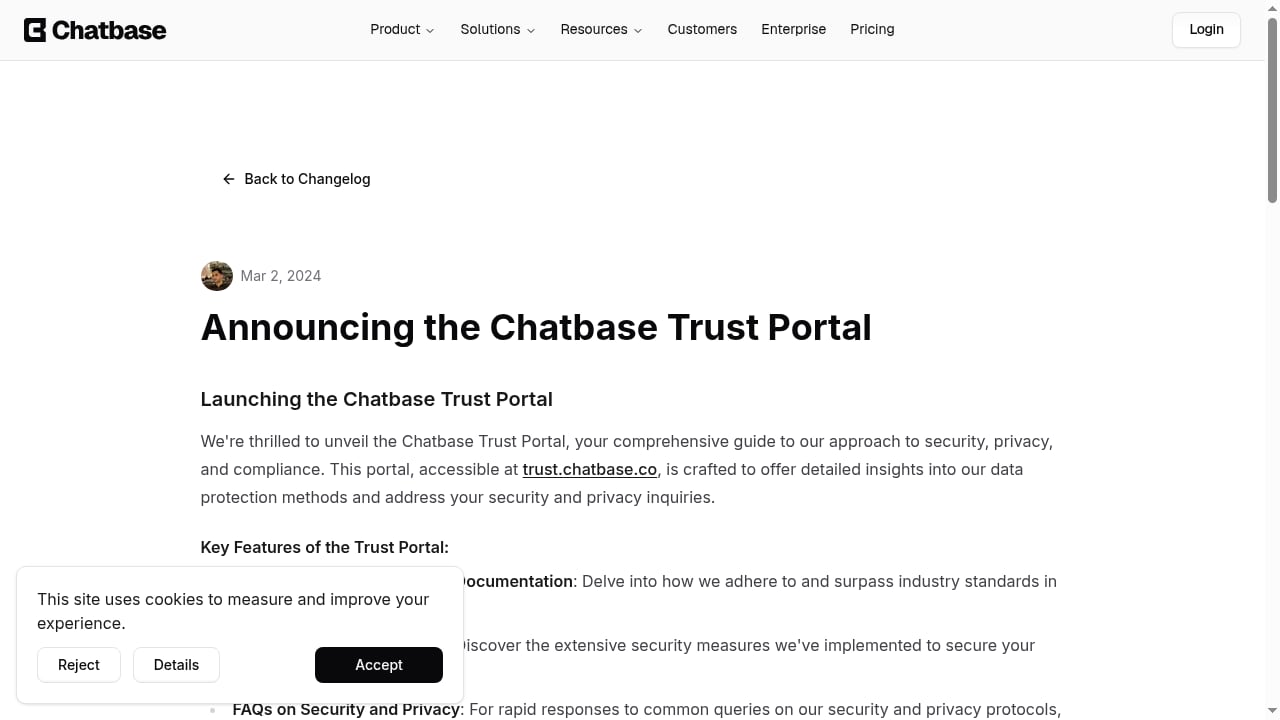
First viewport screenshot of Announcing the Chatbase Trust Portal.
Start with the question that matters most: does the AI take actions, or only suggest them? Ask every vendor for a live demonstration on your highest-volume ticket types. If the demo shows suggested replies rather than completed actions, that is how the tool will perform in production.
Next, examine the pricing model for incentive alignment. A vendor charging per conversation gets paid whether or not the issue was resolved. A vendor charging per fully resolved ticket only gets paid when it was. At thousands of tickets per month, that difference determines whether your costs track outcomes or just volume.
Finally, ask how the AI handles what it cannot resolve. What triggers an escalation? How does the handoff work? Can the AI re-engage after a human steps in? A tool that loops or sends confused replies on unusual requests creates downstream work your agents end up solving manually.
For teams that need omnichannel messaging and marketing automation alongside AI support, a platform like SaleSmartly can complement a dedicated AI agent by unifying WhatsApp, Facebook Messenger, Instagram, and other channels with SCRM and remarketing tools. Our comparison of SaleSmartly, Olark, and Desku explores that adjacent workflow.
Related reading
- How to Use SaleSmartly with IBM: Setup, Workflow & Examples - Learn how to connect SaleSmartly with IBM AI and automation, step by step. Architecture, workflow, practical examples, and the problems the combo solves.
Sources and further reading
- 11 Best AI Customer Support Automation Platforms (2026) - Compare the 11 best AI customer support automation platforms for 2026 on automation depth, conversational AI, pricing, and SaaS-to-enterprise fit.
- The 13 best AI customer support tools in 2026 - A hands-on guide to the 13 best AI customer support tools in 2026, from Zendesk AI and Salesforce Agentforce to Gorgias, Ada and Sierra: checked pricing, architecture, and who each tool is actually for.
- 9 Best Customer Service Automation Software Tools for 2026 - A practical 2026 comparison of customer service automation software, focused on resolution depth, ecommerce fit, pricing models, implementation tradeoffs, and buying questions.
Frequently Asked Questions
What is the difference between an AI customer support automation platform and a traditional helpdesk?
A traditional helpdesk organizes and routes tickets for human agents. An AI customer support automation platform resolves a portion of those tickets autonomously, using conversational AI, natural language processing, and integrations with backend systems to take actions like refunds or order edits.
How much do AI customer support automation platforms cost in 2026?
Pricing varies by model. Entry-level plans start around $10 to $25 per agent per month, with AI usage billed separately per resolution, per conversation, or per session. Enterprise platforms like Ada, Sierra, and Decagon use custom contracts. The total cost depends more on your ticket volume and resolution rate than on the sticker price.
Can AI customer support automation replace human agents entirely?
No. Most platforms are designed to resolve the repetitive majority of tickets and escalate complex or sensitive cases to humans. The handoff quality, not the automation rate, often determines whether the system reduces workload or adds to it.
How long does implementation take?
Self-serve platforms that layer onto an existing helpdesk can go live in days. Native helpdesk AI typically takes one to two weeks. Enterprise platforms sold through sales teams often require a quarter or more for full deployment.
What should I ask vendors during a demo?
Ask for a live demonstration on your highest-volume ticket types, a clear definition of what counts as a resolution, the escalation triggers, and a modeled cost at your actual ticket volume. Request references from companies with similar support operations.
Conclusion
The best AI customer support automation platform for your team depends less on feature checklists and more on three factors: how much the AI actually resolves, how the pricing model aligns with your outcomes, and how quickly you can go live. Zendesk AI and Salesforce Agentforce suit enterprises already invested in those ecosystems. Intercom and Gorgias lead for chat-first and ecommerce use cases. Chatbase offers a content-grounded agent for teams that want AI without a full helpdesk migration. Ada, Sierra, and Decagon serve large enterprises with custom contracts and outcome-based models.
Whichever platform you shortlist, test it against your real tickets before committing. The demo that shows completed actions, not suggested replies, is the one worth trusting.