
SaleSmartly vs Re:amaze: A Cross-Border Customer Service System Selection Guide
Cross-border customer service teams often face a practical problem: customers are scattered across WhatsApp, Facebook Messenger, Instagram, Telegram, and other channels, while the team has limited staff. Choosing a system that can unify management of these channels while also supporting marketing conversion is more important than simply comparing feature lists. This article starts from the real scenarios of cross-border business and compares the positioning differences, capability boundaries, and applicable conditions of SaleSmartly and Re:amaze to help you make a clearer judgment during selection.
Positioning Differences Between the Two Products
First viewport screenshot of Helpdesk and customer messaging designed for schools, universities and other education institutions. | Try Re:amaze.
SaleSmartly is an omnichannel customer communication system centered on human customer service with AI-powered customer service as a supplement. It provides cross-border businesses with online customer service and marketing solutions covering pre-sales, in-sales, and after-sales. It supports integration with WhatsApp, Facebook Messenger, Instagram, Telegram, LINE, Email, VKontakte, WeChat, Zalo, Youtube, and other channels, emphasizing the combination of multi-channel aggregation and marketing outreach.
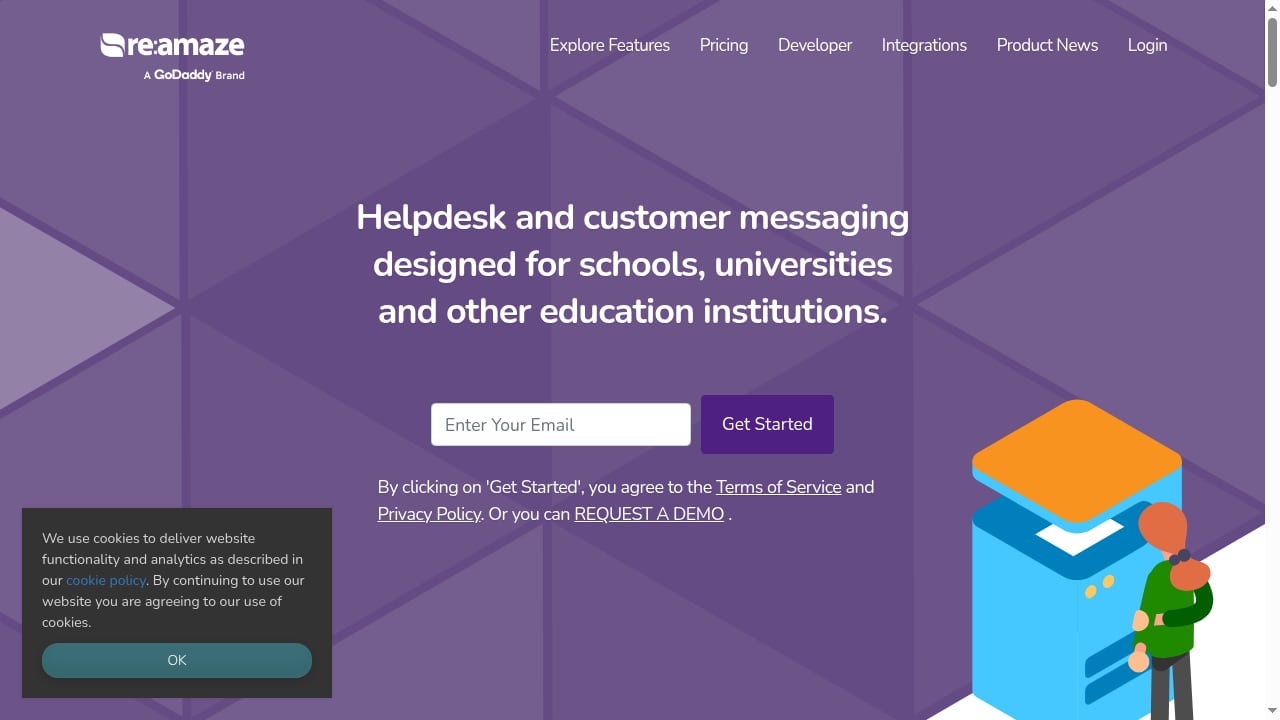
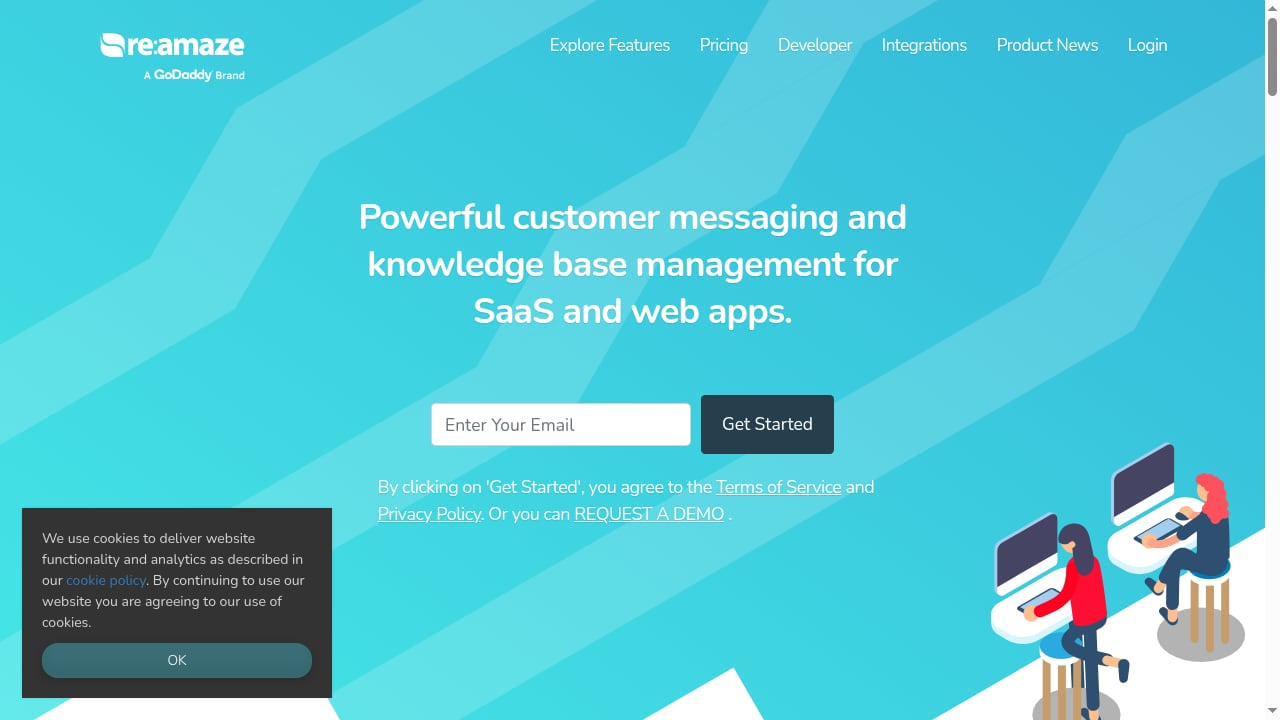
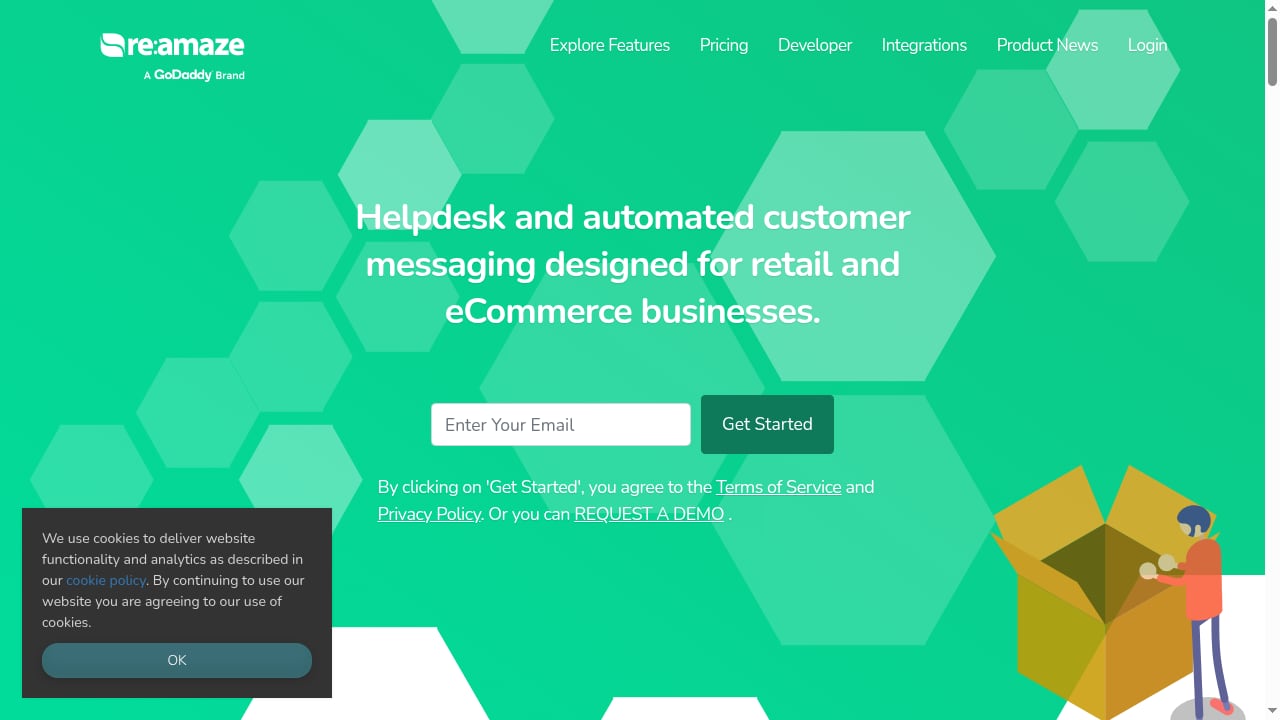
Re:amaze is AI customer service and help desk software for e-commerce and online businesses. Its core is a shared inbox that integrates chat, social, SMS, FAQ, and email into one platform. It offers live chat and automated messages, chatbots, video calls, push notification campaigns, an embeddable FAQ center, a status page, and real-time customer activity monitoring. Its AI capabilities (reply, create, summarize) are in beta. Its positioning leans toward simplicity and ease of use, emphasizing support, engagement, and conversion.
What the two have in common is multi-channel aggregation and customer service collaboration. The differences lie in the breadth of channel coverage, the depth of marketing features, and the maturity and implementation approach of AI capabilities.
Channel Coverage: A Key Dividing Line in Cross-Border Scenarios
First viewport screenshot of Powerful customer messaging and knowledge base management for SaaS and web apps. | Try Re:amaze.
Cross-border businesses often draw customers from multiple regional markets. Southeast Asian markets commonly use LINE and Zalo, Russian and CIS markets commonly use VKontakte, and Middle Eastern and Latin American markets rely heavily on WhatsApp. Whether channel coverage is complete directly determines whether the customer service team needs to maintain multiple additional tools.
SaleSmartly's channel list covers the mainstream communication tools in the above regions and also includes channels such as WeChat and Youtube, making it suitable for teams that need to handle customer inquiries from multiple regions in one backend. Re:amaze's channel mix is mainly chat, social, SMS, FAQ, and email. It covers conventional scenarios for e-commerce standalone stores well, but it is less prominent than the former in the breadth of regional communication tools.
If your customers mainly come from European and American standalone stores, the channel capabilities of both can meet basic needs. If customers are distributed across multiple regions such as Southeast Asia, Russia, or the Middle East, the completeness of channel coverage will become an important weighting factor in selection.
AI Capabilities: Assisting Humans or Replacing Humans
SaleSmartly's AI positioning is "assistance": human customer service remains primary, while AI-powered customer service handles tasks such as automatic replies to repetitive questions and initial triage of common inquiries, helping teams maintain response speed during inquiry peaks. This model suits cross-border teams that have requirements for service quality and brand tone and do not want to hand everything over to machines.
Re:amaze's AI capabilities include reply, create, and summarize, but the official documentation states that they are in beta. This means teams need to reserve time for verification and adjustment before relying on these features to handle formal customer inquiries. For teams that want to quickly launch AI automation, features in beta require more cautious evaluation.
If you plan to deeply combine AI with human customer service, you can refer to How to Combine SaleSmartly with OpenAI: A Cross-Border Customer Service AI Implementation Guide to learn the complete process from integration to configuration.
Marketing and Conversion: Can a Customer Service System Take On Growth Tasks
First viewport screenshot of Helpdesk and automated customer messaging designed for retail and eCommerce businesses. | Try Re:amaze.
Customer service systems for cross-border businesses often do more than answer questions; they also participate in pre-sales guidance and repeat-purchase outreach. SaleSmartly's positioning covers the entire pre-sales, in-sales, and after-sales process, emphasizing the combination of online customer service and marketing solutions. It suits teams that want to complete inquiry conversion and customer maintenance within the same system.
Re:amaze also provides push notification campaigns for re-engagement and sales, as well as real-time customer activity monitoring for personalized sales outreach, with clear conversion design in e-commerce scenarios. Its FAQ center and status page lean more toward self-service and incident communication.
The difference between the two is not whether they support marketing, but how tightly marketing features are coupled with customer service workflows. If your team wants customer service staff to directly complete recommendations, follow-ups, and repeat-purchase outreach while handling inquiries, you need to focus on how marketing tools within the system connect with conversation context.
Applicable Scenarios and Selection Recommendations
First viewport screenshot of www.salesmartly.com.
The following judgments can help you quickly narrow the scope:
- Multi-regional markets with scattered channels: Prioritize SaleSmartly, which has more complete channel coverage, to reduce response delays caused by switching between multiple tools.
- European and American e-commerce standalone stores, mainly email and chat: Re:amaze's shared inbox and FAQ center can meet conventional needs.
- Want AI to assist rather than replace humans: SaleSmartly's human-primary, AI-assisted model is closer to the actual operating rhythm of most cross-border teams.
- Need to quickly launch mature AI automation: Note that Re:amaze's AI features are in beta, so a verification period should be reserved.
- Integration of customer service and marketing: Evaluate how smoothly both complete recommendations and repeat-purchase outreach within conversation context.
If you are still hesitating among multiple products, you can further read SaleSmartly vs CoSupport AI vs Re:amaze: A Cross-Border Customer Service System Selection Comparison to make a cross-comparison across four dimensions: channels, AI automation, pricing, and applicable scenarios.
Practical Implementation Advice
Selection is only the first step; implementation results depend on configuration and process design. It is recommended to complete three things during the trial phase:
- Sort out channel priorities: Count the proportion of inquiries on each channel, prioritize the two or three channels with the highest proportions, and avoid rolling out everything at once, which can reduce response quality.
- Design triage rules between AI and humans: Clarify which questions are automatically answered by AI and which must be transferred to humans, and set clear trigger conditions for human handoff.
- Establish response time metrics: Record first response time and resolution rate by channel, and use data to verify whether the system truly improves efficiency.
If the customer service process involves payment collection and order confirmation, you can refer to SaleSmartly and PayPal Open Integration: A Cross-Border Customer Service and Payment Collaboration Guide to learn how customer service and payment steps can work together.
Frequently Asked Questions
What is the biggest difference between SaleSmartly and Re:amaze?
SaleSmartly is centered on human customer service with AI as a supplement, has broader channel coverage, and emphasizes integrated cross-border omnichannel service and marketing. Re:amaze is centered on a shared inbox, focuses on the help desk experience for e-commerce and online businesses, and its AI features are in beta.
If I only run a standalone store for European and American markets, do I need to worry about channel coverage?
Not necessarily. European and American markets mainly use email, chat, and social platforms, and the basic channels of both can cover them. Differences in channel coverage become significantly magnified only when operating in multi-regional markets.
Can Re:amaze's AI features be safely used for formal customer service?
Its AI capabilities are currently in beta. It is recommended to first verify accuracy and tone consistency in a small range of inquiries, then gradually expand usage to avoid directly affecting customer experience.
If the team is small, which one should we choose?
Small teams need to reduce tool switching and learning costs even more. First clarify the main source channels of customers, then choose the product that is simpler to configure and has a smoother response process on those channels, and verify the actual operating experience through a trial.
How can I determine whether a customer service system truly improves efficiency?
It is recommended to compare first response time, average resolution time, and customer satisfaction before and after launch, and break down the data by channel. Only channel-specific data can reflect the system's effect in real business.
Conclusion
SaleSmartly and Re:amaze are both customer service tools for online businesses, but their service focus differs. SaleSmartly's advantages lie in channel breadth in cross-border scenarios, the way humans and AI work together, and the integrated design of customer service and marketing. Re:amaze's advantages lie in its simple shared inbox experience and e-commerce help desk features. When selecting, do not pursue the most features; instead, prioritize matching your customer source channels, team operating rhythm, and stage of AI implementation. It is recommended to use real inquiry data for a round of trial comparison before deciding on long-term investment.
Reference sources:
Related reading
- SaleSmartly vs DelightChat: A Cross-Border Customer Service System Selection Guide - Compare the differences between SaleSmartly and DelightChat in channel coverage, AI capabilities, marketing features, and applicable scenarios to help cross-border businesses choose a more suitable customer service system.