
SaleSmartly vs SleekFlow vs Zendesk: Which AI Omnichannel Platform Fits Your Business?
Choosing the right customer communication platform can feel like navigating a maze of features, pricing tiers, and integration promises. SleekFlow and Zendesk are two prominent names that often appear on shortlists, each bringing distinct strengths to the table. SaleSmartly enters the conversation as a specialized alternative built for cross-border teams that need deep multilingual support and broad social channel coverage without the complexity or cost overhead. This comparison breaks down how these three platforms stack up across the criteria that matter most, so you can match the tool to your actual workflow—not just the feature list.
SleekFlow: Conversational Commerce and Revenue Acceleration

SleekFlow product interface.
SleekFlow positions itself as an AI-powered conversational commerce platform. Its core philosophy is turning everyday customer interactions into revenue opportunities. Rather than treating support as a cost center, SleekFlow builds sales and marketing automation directly into the messaging experience.
Where SleekFlow Excels
Unified Inbox with VoIP and Email SleekFlow goes beyond standard messaging channels by integrating email and VoIP calls into its omnichannel inbox. For teams that handle a mix of phone, email, and social messaging, this consolidation eliminates the need to switch between separate tools. Agents can manage a WhatsApp chat, take a voice call, and respond to an email from a single interface, preserving full conversation context across channels.
Flow Builder and AI Agent Customization The platform’s drag-and-drop Flow Builder lets non-technical teams design sophisticated automation sequences for lead qualification, campaign outreach, and post-purchase follow-ups. Combined with AgentFlow—a tool for building custom AI agents—SleekFlow enables businesses to automate revenue-generating conversations without developer resources. These AI agents can handle common inquiries, qualify leads based on predefined criteria, and hand off complex cases to human agents when needed.
Native CRM and E-commerce Integrations SleekFlow offers deep native integrations with Salesforce, HubSpot, and Shopify. This means customer data, deal stages, and order histories flow bidirectionally between your CRM or store and the messaging platform. For example, a support agent can view a customer’s Shopify order status directly within the chat window and generate a payment link to close a sale—no third-party middleware required.
Enterprise Security and Responsible AI SleekFlow holds SOC 2 Type II compliance and ISO/IEC 42001:2023 certification for responsible AI management. For businesses in regulated industries or those with strict data governance requirements, these certifications provide assurance that AI features are deployed with appropriate oversight and that customer data is handled securely.
SleekFlow’s Limitations to Consider SleekFlow’s pricing starts at $149 per month (billed yearly) for a minimum of three users, which can become expensive for smaller teams or businesses with fluctuating agent counts. While it supports major channels like WhatsApp, Instagram, and SMS, its social channel coverage is narrower than platforms built specifically for cross-border use. Teams needing support for channels like LINE, VKontakte, or Zalo may find gaps. Additionally, real-time translation is not a core feature, which can slow down international support workflows.
Zendesk: Enterprise-Grade Support Infrastructure
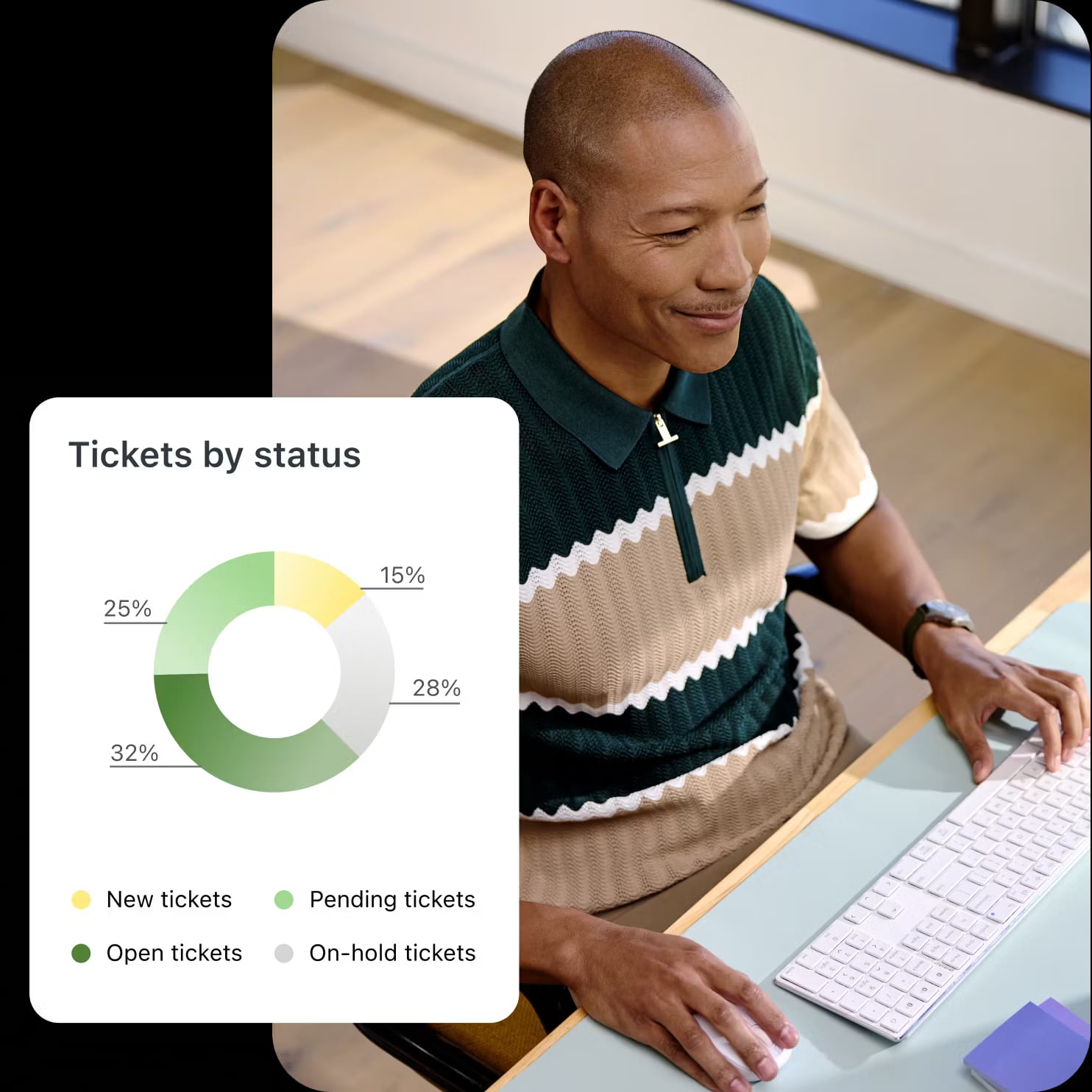
Zendesk product interface.
Zendesk is a mature, AI-powered customer service platform trusted by over 22,000 AI customers and recognized as a Leader in the 2025 Gartner Magic Quadrant for CRM Customer Engagement Center. Its strength lies in structured, scalable support operations for teams that need sophisticated ticketing, routing, and workforce management.
Where Zendesk Excels
Resolution Learning Loop and AI Agents Zendesk’s AI agents don’t just deflect inquiries—they learn from every interaction through the Resolution Learning Loop. This self-improving mechanism analyzes resolved tickets, agent responses, and customer feedback to continuously refine automated answers. The platform claims up to 80% automation rates, backed by 830 million AI interactions and 4.8 billion resolutions delivered. For high-volume support teams, this learning capability means the AI becomes more accurate and autonomous over time.
Comprehensive Workforce Management Zendesk includes built-in workforce management (WFM) and quality assurance (QA) tools. Managers can forecast ticket volumes, schedule agents accordingly, monitor real-time adherence, and review interaction quality—all within the same platform. This integrated approach is particularly valuable for contact centers and large support organizations where staffing efficiency directly impacts service levels and cost.
Unified Resolution Platform and Analytics The Resolution Platform connects data and workflows across disparate systems, breaking down silos between support, sales, and operations. Zendesk’s analytics go beyond basic response metrics to provide operational insights, trend analysis, and customizable dashboards. Teams can track SLA compliance, identify recurring issues, and measure the business impact of support interactions.
Extensive Marketplace and Customization With over 1,200 apps in its marketplace, Zendesk can integrate with virtually any business tool—though many integrations come with additional fees. The platform supports complex customization through APIs, custom objects, and workflow automations, making it adaptable to unique business processes.
Zendesk’s Limitations to Consider Zendesk’s per-agent pricing model ($55–$169 per agent per month for the Suite plans) makes it one of the more expensive options, especially as teams scale. Setup complexity is a frequently cited challenge; businesses without dedicated IT resources may struggle with implementation and ongoing administration. Users also report that certain channel integrations—like Instagram messaging—require additional paid add-ons, and native payment link functionality depends on third-party apps with separate per-agent fees. For teams that prioritize conversational commerce over structured ticketing, Zendesk’s interface can feel heavy and support-centric rather than sales-oriented.
SaleSmartly: Cross-Border Communication with AI-Powered Translation
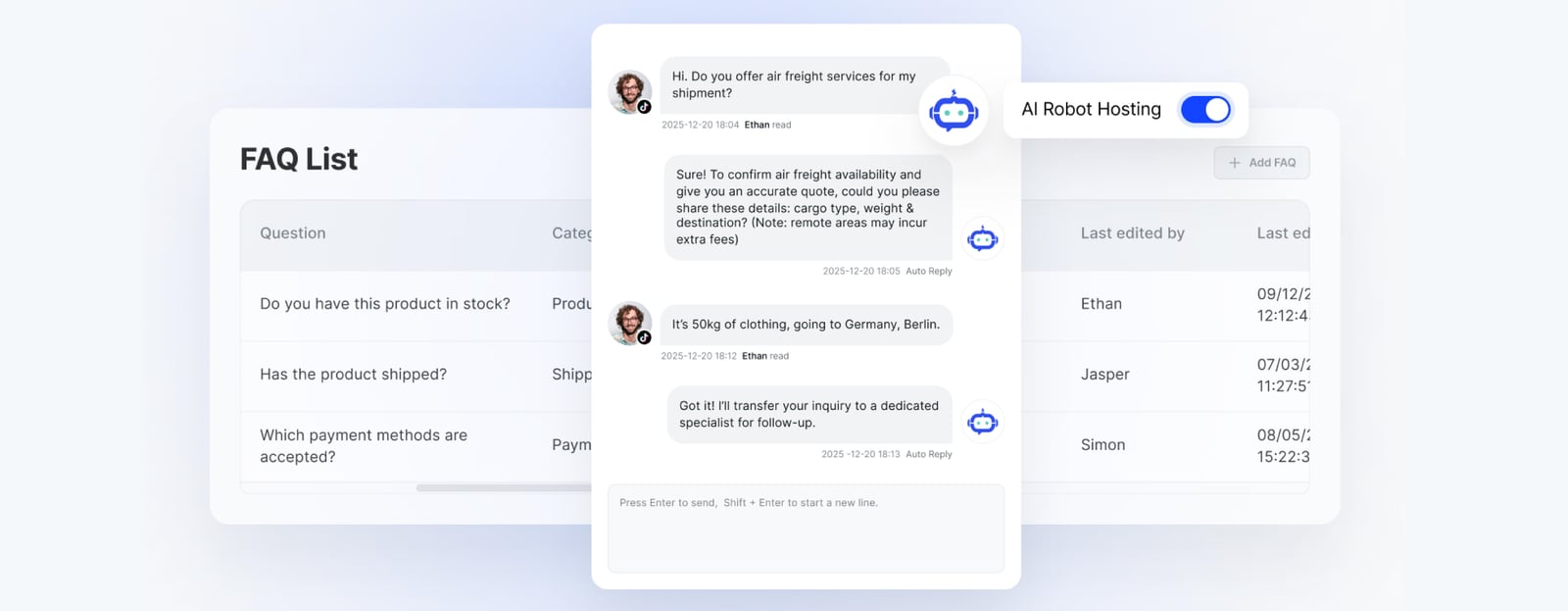
SaleSmartly product interface.
SaleSmartly is purpose-built for businesses that operate across multiple countries, languages, and social platforms. It unifies 10+ messaging channels—including WhatsApp, Facebook Messenger, Instagram, Telegram, LINE, WeChat, VKontakte, Zalo, and YouTube—into a single workspace. The platform combines AI agents, automation rules, and a built-in CRM to help teams scale personalized support without multiplying headcount.
Where SaleSmartly Holds an Advantage
Real-Time Translation in 134 Languages SaleSmartly’s standout feature is its two-way, real-time translation engine supporting 134 languages. When a customer messages in Spanish and an agent responds in English, both sides see the conversation in their own language—instantly. This eliminates the need for separate translation tools or multilingual staffing, making it uniquely suited for cross-border e-commerce, international B2B inquiry management, and global customer support teams. SleekFlow and Zendesk do not offer comparable built-in translation breadth without third-party integrations.
Broader Social Channel Coverage While SleekFlow and Zendesk cover the major Western channels well, SaleSmartly extends to platforms critical for specific regional markets: LINE (dominant in Japan, Taiwan, Thailand), Zalo (Vietnam), VKontakte (Russia and Eastern Europe), and WeChat (China). For businesses targeting these markets, native channel support means no workarounds, no separate tools, and full conversation history in one place.
Customer Source Tracking and Ad Attribution SaleSmartly tracks customer acquisition sources across messaging channels, including Meta advertising source attribution. Teams can see which ad campaign, post, or organic search brought a customer to the conversation and associate that data with the customer profile. This closed-loop attribution helps marketing teams measure messaging-channel ROI directly—a capability less developed in purely support-focused platforms.
Freemium Model and Lower Entry Cost Unlike SleekFlow’s $149/month starting price or Zendesk’s per-agent fees, SaleSmartly offers a free plan and paid plans starting at $12.72 per month (annual billing). This makes it accessible for small businesses, startups, and teams testing omnichannel strategies before committing to larger investments. The pricing scales with seats and official channels rather than imposing a high fixed minimum.
Security Certifications for International Operations SaleSmartly holds ISO 27001, ISO 27701, and CCRC certifications, addressing data security and privacy requirements that matter for cross-border data flows. These certifications are particularly relevant for businesses managing customer data across jurisdictions with different regulatory standards.
Built-In CRM and Team Collaboration The platform includes a built-in CRM that unifies customer profiles, conversation histories, order information, and follow-up records across multiple brands and social accounts. Team collaboration features—automatic assignment, internal notes, conversation transfer, and permission management—support distributed support teams without requiring a separate CRM integration.
Feature Comparison at a Glance
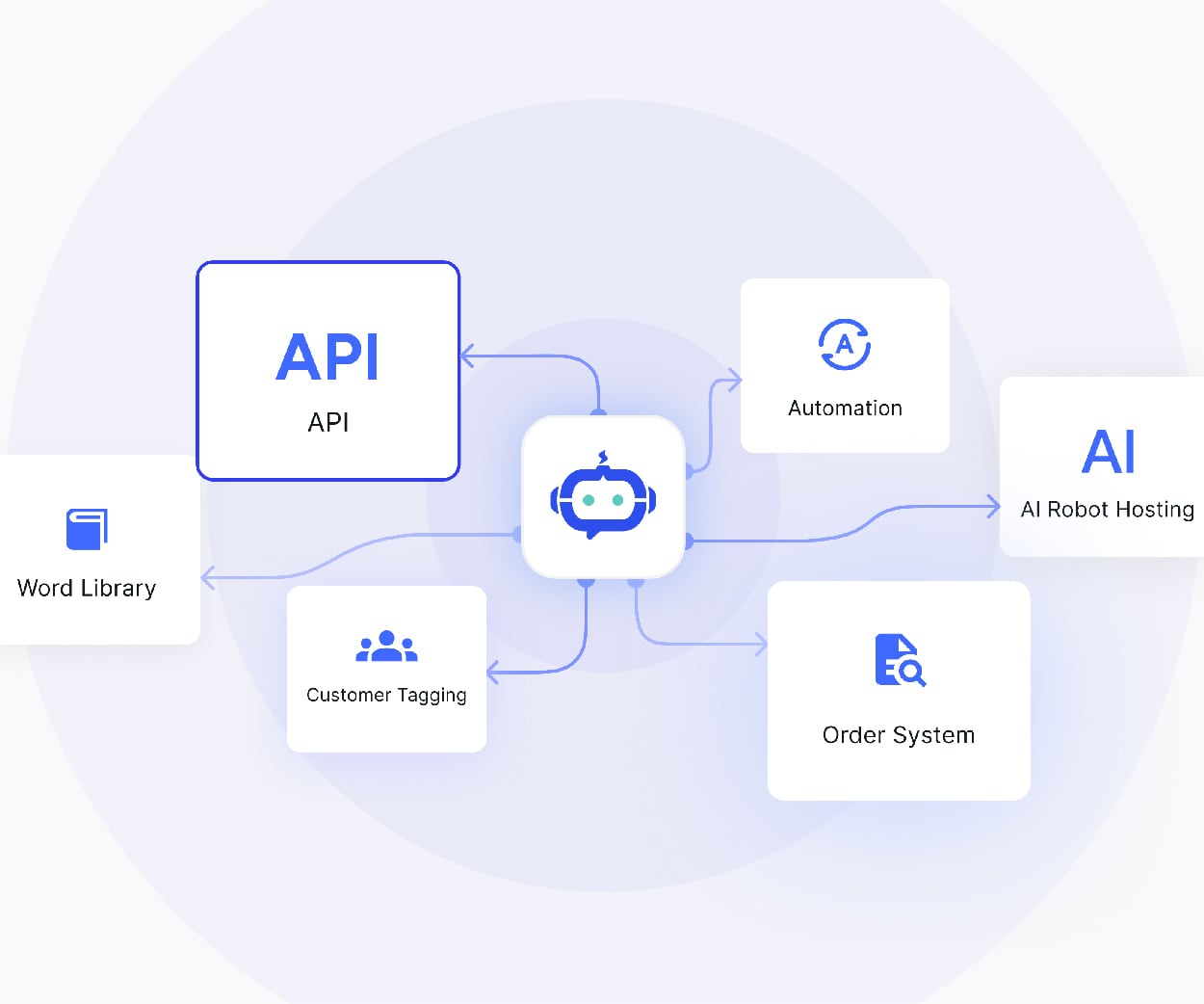
SaleSmartly product interface.
| Feature | SaleSmartly | SleekFlow | Zendesk |
|---|---|---|---|
| Best For | Cross-border businesses needing broad channel coverage and translation | B2C brands focused on conversational commerce and revenue | Structured support teams needing ticketing, WFM, and analytics |
| AI Agents | Yes, with external AI platform connections | Yes, with custom AgentFlow builder | Yes, with self-improving Resolution Learning Loop |
| Real-Time Translation | 134 languages, built-in | Not a core feature | Via third-party integrations |
| Social Channels | 10+ including LINE, Zalo, VKontakte, WeChat | WhatsApp, Instagram, SMS, plus email and VoIP | WhatsApp, Facebook, Instagram (some via paid add-ons) |
| Pricing Model | Freemium; plans from $12.72/month | From $149/month (3 users min., annual) | From $55/agent/month (Suite Team, annual) |
| CRM Integration | Built-in CRM | Native Salesforce, HubSpot, Shopify | Marketplace apps (often paid) |
| Payment Links | Not a highlighted feature | Native Stripe integration | Via third-party apps (per-agent fees) |
| Workforce Management | Not available | Not available | Built-in WFM and QA |
| Security Certifications | ISO 27001, ISO 27701, CCRC | SOC 2 Type II, ISO/IEC 42001:2023 | SOC 2, ISO 27001 |
Which Platform Should You Choose?
Choose SleekFlow if your primary goal is driving revenue from conversations. Its native payment links, Shopify and CRM integrations, and Flow Builder make it a strong fit for e-commerce brands and B2C companies that want to close sales directly within messaging threads. The inclusion of VoIP and email in the unified inbox also suits teams that handle phone-based sales alongside digital channels.
Choose Zendesk if you run a structured customer service operation that requires advanced ticketing, SLA management, workforce planning, and quality assurance. Its AI learning loop and analytics depth are hard to match for high-volume support teams. However, be prepared for higher per-agent costs and a more complex setup process.
Choose SaleSmartly if you serve customers across multiple countries and languages, or if you need to engage audiences on region-specific platforms like LINE, Zalo, or VKontakte. The built-in 134-language translation, broader channel coverage, and lower entry price make it the practical choice for cross-border SMBs and growing teams that want omnichannel capabilities without enterprise complexity. For a deeper look at how SaleSmartly compares specifically with SleekFlow, see our SaleSmartly vs LiveChat vs SleekFlow comparison.
Practical Scenarios
Scenario 1: A Southeast Asian E-commerce Brand Expanding Regionally
A fashion retailer based in Thailand wants to sell to customers in Vietnam, Indonesia, and Japan. The team needs to support LINE for Japanese customers, Zalo for Vietnamese customers, and WhatsApp for Indonesian customers—all while communicating in local languages.
Recommendation: SaleSmartly. The platform natively supports all three channels and provides real-time translation so a small Thai-based team can handle inquiries in Japanese, Vietnamese, and Bahasa Indonesia without hiring native speakers for each market.
Scenario 2: A DTC Brand Scaling Conversational Sales
A direct-to-consumer wellness brand uses Shopify and wants to convert Instagram and WhatsApp conversations into sales. The team needs to send payment links, track deals through a CRM pipeline, and automate abandoned-cart recovery messages.
Recommendation: SleekFlow. The native Shopify integration, Stripe payment links, and Flow Builder automation align directly with this revenue-focused workflow. Agents can view order histories and send invoices without leaving the chat.
Scenario 3: A Growing SaaS Company Formalizing Support
A B2B SaaS company with 50 support agents needs structured ticketing, SLA tracking, and workforce management as it scales. The team handles email, chat, and occasional phone support, with complex escalation paths and reporting requirements.
Recommendation: Zendesk. The built-in WFM, QA tools, and Resolution Learning Loop provide the operational infrastructure a maturing support organization needs. The per-agent pricing is justifiable given the depth of features used.
Related reading
- Lazada Review 2025: Honest Pros, Cons & Who Should Use It - Unbiased Lazada review covering real shopper experiences, LazMall authenticity, delivery reliability, buyer protection, and key pros and cons. See if it fits your shopping needs.
- Google Analytics Review 2025: Honest Pros, Cons & Pricing - Unbiased Google Analytics review covering real-world strengths, limitations, GA4 setup, pricing signals, and who should use it. See if it's right for your business.
- eBay Review 2025: Honest Pros, Cons & Buyer Safety Tips - Unbiased eBay review: real buyer and seller experiences, feedback trust, fees, shipping, and safety. Learn who should use eBay and how to avoid scams.
Sources and further reading
- 10 Best SleekFlow Alternatives Compared for 2026 - Compare 10 leading SleekFlow alternatives for 2026, including SaleSmartly, Respond.io, WATI, Trengo, Gorgias and more. Review features, pricing, limitations and ideal use cases.
- ServiceNow vs Zendesk: CSM solutions - ServiceNow - Take a closer look how ServiceNow and Zendesk CSM solutions are tailored for different business needs. Learn more on how ServiceNow complements your CSM.
- A Zendesk alternative: the best customer support software for your business - Discover the best customer support software, from free Zendesk alternatives to paid solutions with better quality tailored to your business type and size.
Frequently Asked Questions
Is SaleSmartly a good alternative to SleekFlow?
Yes, particularly for businesses that need broader social channel coverage and built-in translation. SaleSmartly supports platforms like LINE, Zalo, and VKontakte that SleekFlow does not cover natively, and its real-time 134-language translation is a significant advantage for international teams. SleekFlow remains stronger for native payment links and conversational commerce workflows.
Can Zendesk handle conversational commerce like SleekFlow?
Zendesk can support conversational commerce through marketplace integrations, but it is not its primary design focus. Features like in-chat payment links and CRM-integrated deal tracking typically require third-party apps with additional per-agent fees. SleekFlow builds these capabilities natively, making it a more streamlined choice for revenue-driven messaging.
Which platform is most affordable for small teams?
SaleSmartly offers the lowest entry point with a free plan and paid plans starting at $12.72 per month. SleekFlow requires a minimum three-user commitment at $149 per month (annual billing). Zendesk’s Suite Team plan starts at $55 per agent per month, which can add up quickly for even small teams.
Does SaleSmartly integrate with e-commerce platforms?
SaleSmartly focuses on messaging channel integration and built-in CRM rather than native e-commerce platform connections. For businesses that need deep Shopify or payment link integration, SleekFlow offers more native options. SaleSmartly users can explore workflow connections through its external AI platform integrations and automation rules. If you sell on marketplaces, our guide on how to use SaleSmartly with eBay shows practical ways to connect omnichannel support to your selling workflow.
Which platform is best for enterprise security and compliance?
All three platforms hold reputable security certifications. Zendesk and SaleSmartly both maintain ISO 27001 and SOC 2 compliance. SleekFlow adds ISO/IEC 42001:2023 for AI management. The right choice depends on your specific regulatory requirements and whether AI governance certifications matter for your industry.
Conclusion
SleekFlow, Zendesk, and SaleSmartly each serve distinct needs within the omnichannel communication landscape. SleekFlow shines when the goal is turning conversations into revenue, with native payment and CRM integrations that streamline the path from chat to sale. Zendesk remains the benchmark for structured, scalable customer service operations that demand workforce management, deep analytics, and self-improving AI at enterprise scale. SaleSmartly carves its niche by solving the practical challenges of cross-border communication—language barriers, regional channel fragmentation, and cost-effective scaling—making it the pragmatic choice for international teams that need to be everywhere their customers are, in any language. For a broader view of how these platforms fit into the 2026 omnichannel landscape, explore our top 10 AI omnichannel communication platforms for cross-border business.