
SaleSmartly vs Tidio vs Zendesk: Which Customer Service Platform Fits Your Business?
Choosing between SaleSmartly, Tidio, and Zendesk means weighing very different philosophies. Tidio focuses on making AI-powered chat simple for growing ecommerce brands. Zendesk is an enterprise-grade resolution platform built for complex support operations. SaleSmartly sits in a distinct lane: omnichannel messaging for cross-border businesses that need WhatsApp, Telegram, LINE, and other international channels in one inbox.
This comparison breaks down the three tools across AI capabilities, channel coverage, multilingual support, pricing, and ideal use cases so you can choose with confidence.
Quick Verdict: Which Platform Should You Choose?
Tidio product interface.
| Your Situation | Best Fit |
|---|---|
| You run a cross-border or emerging-market business and need WhatsApp, Telegram, LINE, WeChat, or Zalo support | SaleSmartly |
| You run an ecommerce store and want an easy AI chat + live chat combo with fast setup | Tidio |
| You are a mid-market or enterprise team needing deep workflow automation, QA, WFM, and enterprise compliance | Zendesk |
| You need real-time translation across dozens of languages for global support | SaleSmartly |
| You want predictable, low-cost AI automation for repetitive store inquiries | Tidio |
AI Agents: Different Depths of Automation
Tidio product interface.
Tidio: Lyro, the Fast-Answer Specialist
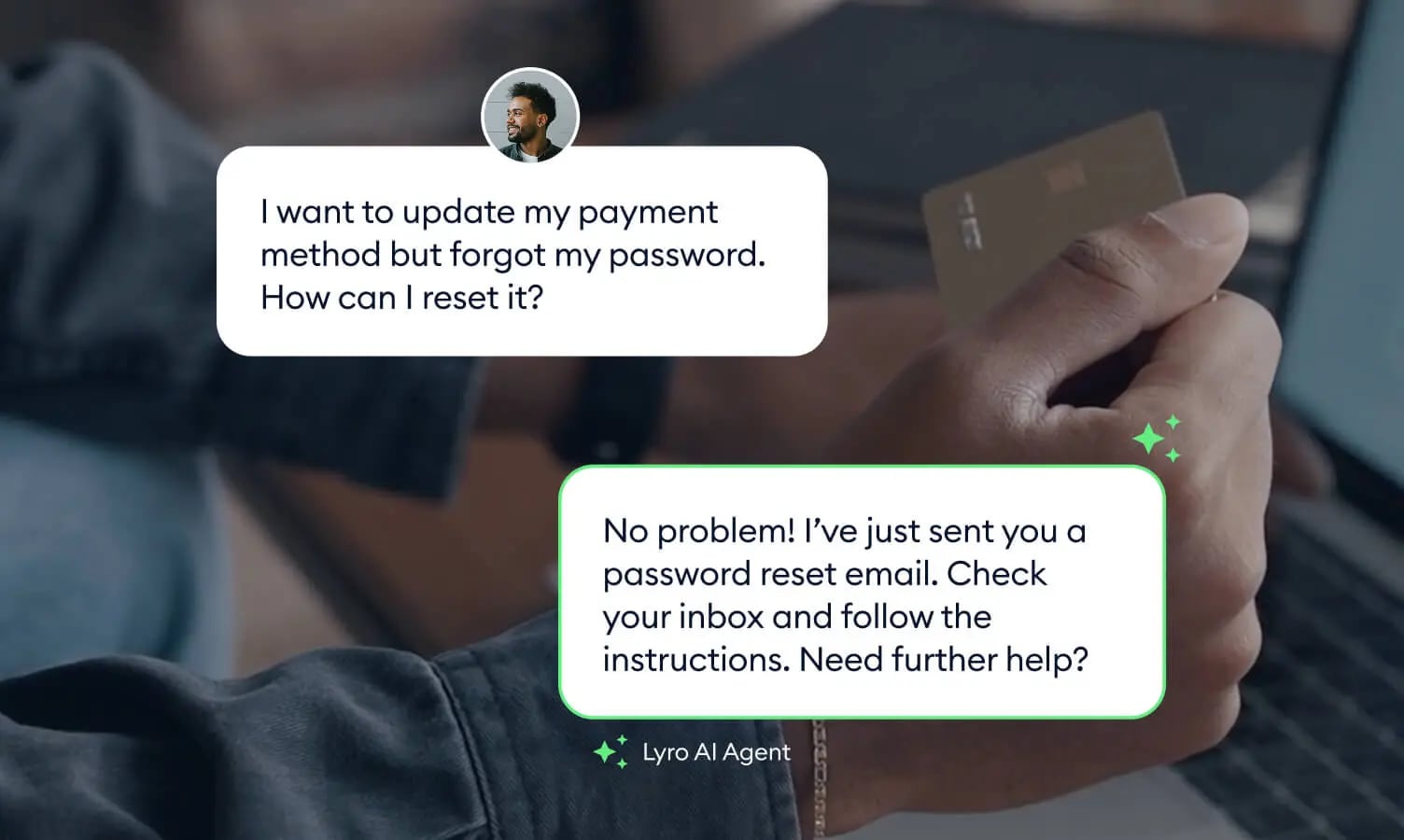
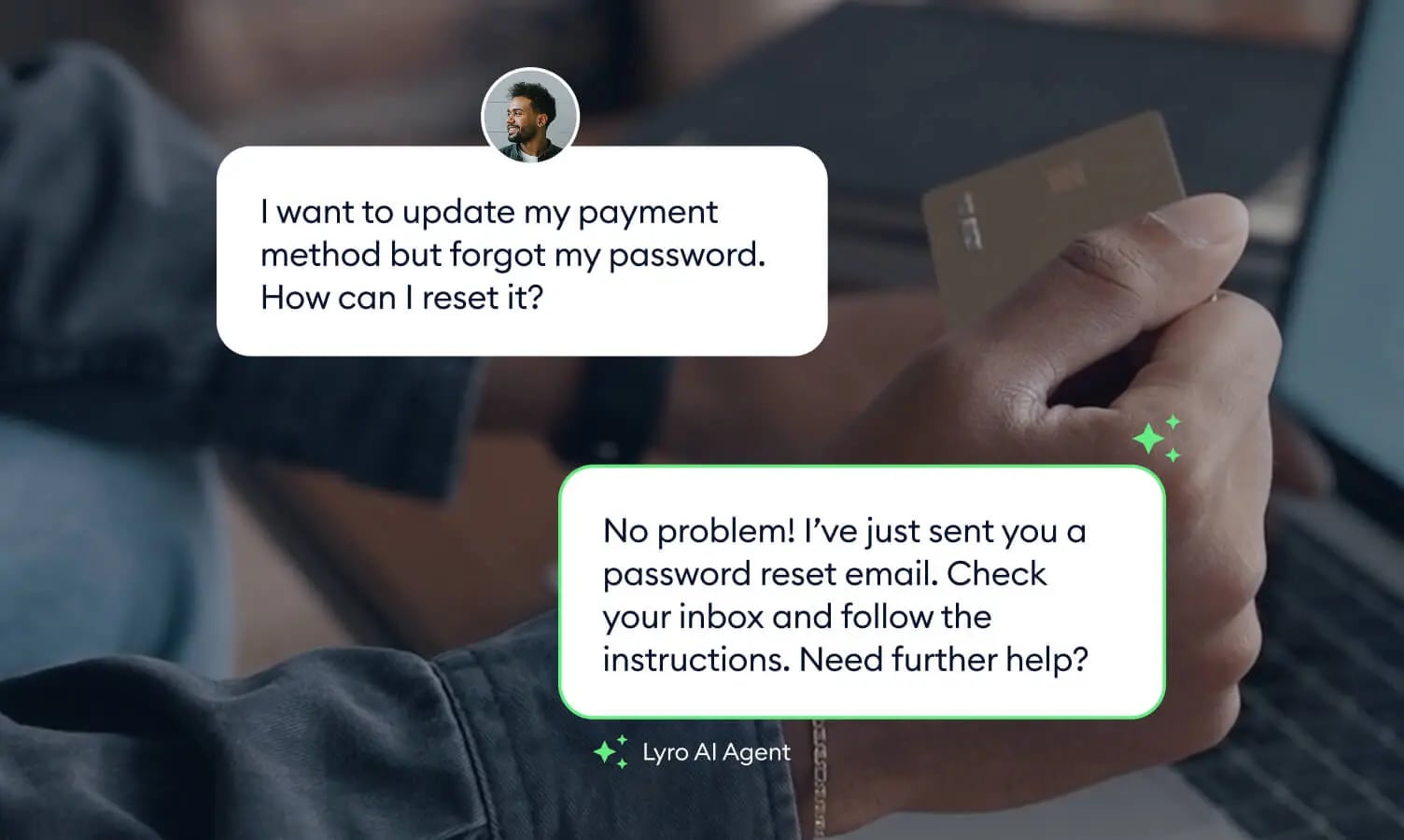
Tidio's Lyro AI agent is built for speed on ecommerce and service websites. It learns from your help center, product catalog, and past conversations, then resolves repetitive questions such as order status, shipping policy, and return eligibility in seconds. Tidio reports that Lyro can solve up to 67% of customer problems without human involvement.
A notable proof point comes from Cove Smart, which saw a 70% increase in self-service resolution, an 80% reduction in response times, and a 35% boost in customer satisfaction after deploying Tidio. For lean teams that want AI to deflect routine tickets immediately, Tidio delivers a focused, easy-to-manage experience.
Zendesk: AI Built for Resolution at Scale
Zendesk takes a broader approach. Its AI agents operate across email, chat, voice, and social messaging, and the platform's "Resolution Learning Loop" means the AI improves from every interaction. Zendesk reports up to 80% automation potential and counts 22,000+ AI customers with 830 million AI interactions delivered.
Where Zendesk stands apart is operational depth: workforce management, quality assurance, advanced analytics, and a marketplace of integrations. This is not a chatbot bolted onto a widget; it is a full customer service operating system. The trade-off is complexity and cost, which we cover below.
SaleSmartly: AI Agents for Cross-Border Conversations
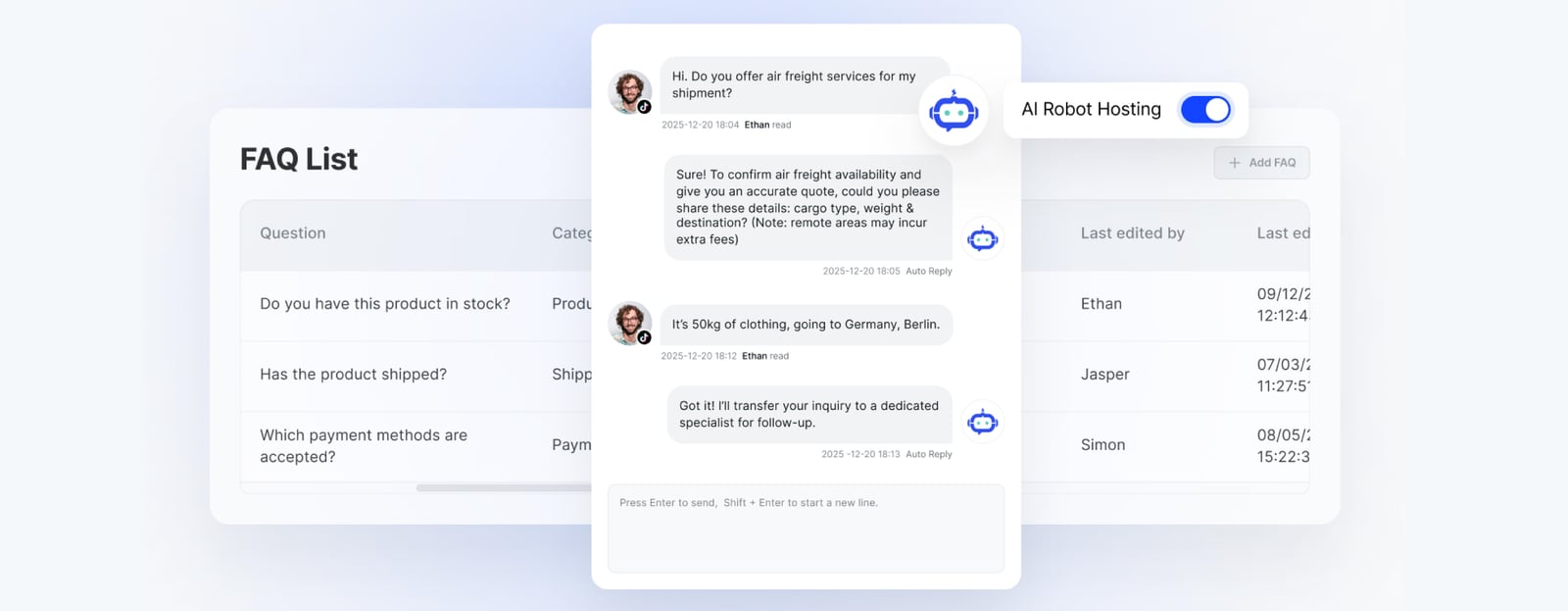
SaleSmartly combines human-led support with AI agents that automate conversations across international messaging channels. Its AI can handle frequent inquiries, route conversations, and assist agents with suggested replies. Where SaleSmartly adds unique value is its built-in real-time translation in 134 languages, which lets a single agent serve customers across markets without language barriers.
For cross-border teams, this matters more than raw automation percentage. A support agent in one country can answer a WhatsApp message from Brazil, a LINE message from Thailand, and a Telegram message from Russia in the same unified inbox, with the AI translating both directions.
Omnichannel Coverage: Where Each Platform Shines
SaleSmartly product interface.
SaleSmartly: Built for International Messaging
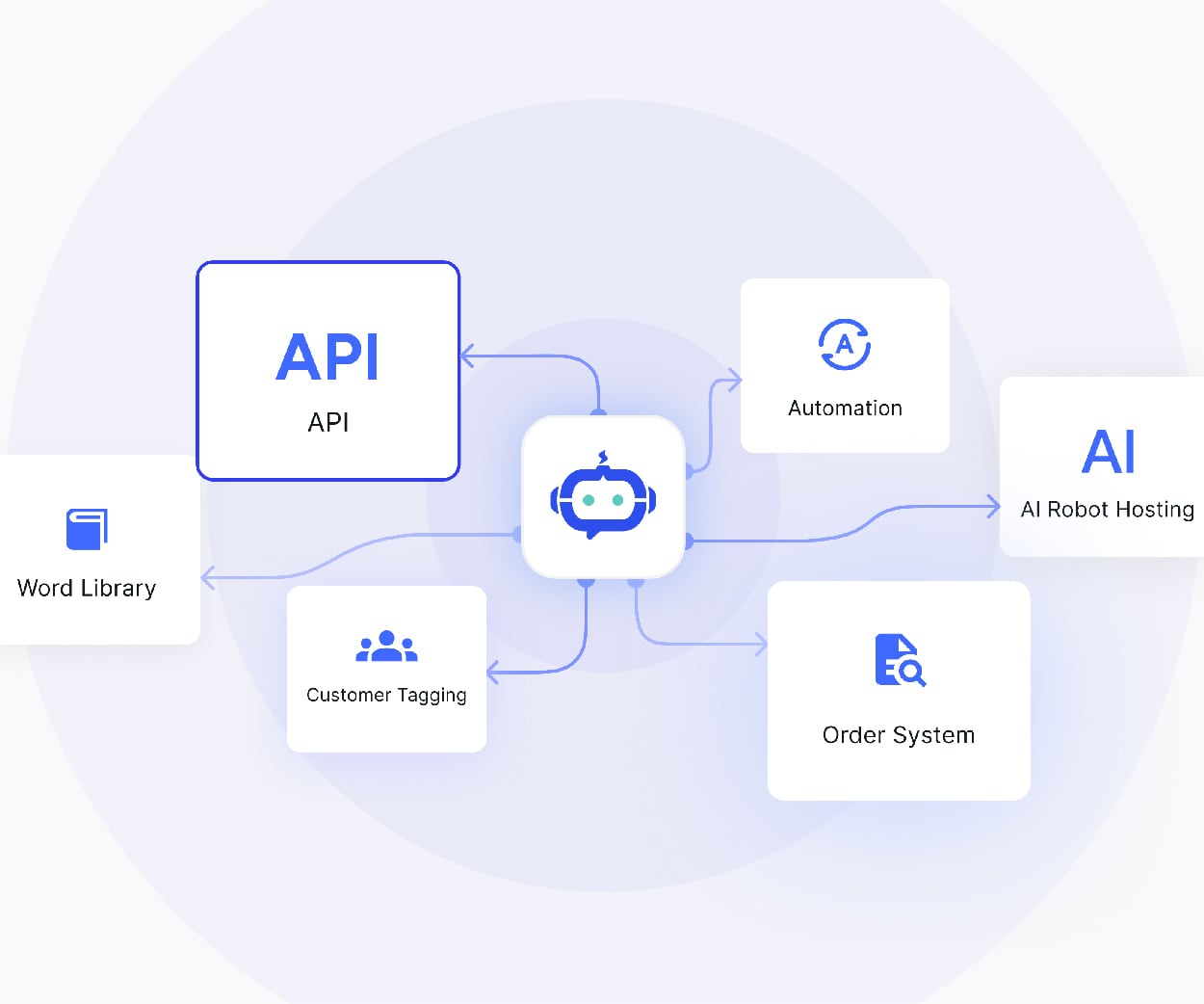
SaleSmartly's channel list reflects its cross-border focus: WhatsApp, Facebook Messenger, Instagram, Telegram, LINE, Email, VKontakte, WeChat, Zalo, and YouTube. That is a rare combination. Most Western-first platforms ignore VKontakte, Zalo, and WeChat entirely, yet these channels are essential for reaching customers in Russia, Vietnam, and China.
The platform also offers specialized solutions for WhatsApp private-domain marketing, Facebook social service, click-to-message ad conversion, B2B inquiry management, and ecommerce shopping guidance. If your growth strategy depends on message-based engagement in multiple regions, this channel depth is hard to match.
Tidio: Focused on Web Chat and Core Social
Tidio integrates live chat, Facebook, and Instagram natively. Its interactive widget doubles as a live chat plugin and chatbot, making it straightforward for website-first businesses. Tidio does not position itself as a deep WhatsApp or Telegram hub; it optimizes for the website visitor and the most common Western social channels.
For a Shopify store or service business whose customers primarily reach out via the website, Tidio's focus is a feature, not a limitation. You get a polished chat experience without managing a dozen channel integrations.
Zendesk: Broad but Enterprise-Oriented
Zendesk supports email, voice, chat, and social messaging, including WhatsApp. Its strength is not the number of niche channels but the depth of each supported channel: full ticket workflows, SLAs, routing rules, and analytics across every touchpoint. For a Fortune 500 support team, Zendesk's omnichannel depth is industry-leading.
However, Zendesk's channel coverage skews toward channels common in North America and Europe. Businesses targeting markets where LINE, Zalo, VKontakte, or WeChat dominate may need additional tools or custom integrations.
Multilingual Support: The Cross-Border Differentiator
SaleSmartly product interface.
This is where the three platforms diverge most clearly.
SaleSmartly includes real-time translation in 134 languages as a core feature. Agents type in their native language, and customers receive messages in theirs. This is not a plugin or add-on; it is built into the platform's DNA for cross-border communication.
Tidio supports multilingual chat widgets and can serve customers in multiple languages, but its translation capabilities are more limited and typically require manual setup or third-party tools.
Zendesk offers multilingual content management and can support multiple languages across help centers and tickets, but real-time conversational translation is not its primary focus. Enterprise teams often pair Zendesk with separate translation services.
For a business actively selling into multiple language markets, SaleSmartly's native translation removes a significant operational headache.
Pricing: From Freemium to Enterprise
SaleSmartly
SaleSmartly operates a freemium model with paid plans starting at $12.72 per month. The free plan includes one member, one social media account, and a 1,000-conversation quota. Paid plans expand seats, social accounts, and WhatsApp device connections. For SMBs entering cross-border markets, this is an accessible entry point.
Tidio
Tidio also offers a free plan, with paid tiers starting at $29 per month for the Starter plan. The Communicator plan is priced per seat at $25 per month per seat, and the Automation plan starts at $29 per month. Tidio's pricing is predictable and scales reasonably for growing ecommerce teams, though AI-heavy features sit in higher tiers.
Zendesk
Zendesk is the most expensive of the three. Team plans start at $69 per month per seat, Growth at $115 per month per seat, and Professional at $149 per month per seat. For a team of five, that is $345 to $745 per month before add-ons. Zendesk's pricing reflects its enterprise positioning, but it can be prohibitive for small businesses.
Cost takeaway: SaleSmartly is the most affordable for cross-border SMBs, Tidio is mid-range and ecommerce-friendly, and Zendesk is an enterprise investment.
CRM and Team Collaboration
SaleSmartly includes a built-in CRM that tracks customer interactions across channels, helping teams manage leads and support history without a separate tool. Team collaboration features such as internal notes and assignment rules keep cross-border teams aligned.
Tidio offers a lightweight help desk with smart ticketing and basic customer context, but it is not a full CRM. Businesses needing deep customer relationship management typically integrate Tidio with a separate CRM.
Zendesk provides extensive CRM-like functionality through its Resolution Platform and integrates with major CRMs, but its core strength is ticket and workflow management rather than sales-oriented CRM. For support operations, Zendesk's data model is powerful; for sales pipelines, you will likely pair it with a dedicated CRM.
Security and Compliance
For businesses handling sensitive customer data, certifications matter.
- SaleSmartly holds ISO 27001, ISO 27701, and CCRC security certifications, which is notable for a platform at its price point.
- Zendesk is trusted by Fortune 100/500 companies and maintains SOC 2 and ISO 27001 compliance, making it a safe choice for heavily regulated industries.
- Tidio provides standard security measures appropriate for its market segment but does not emphasize enterprise compliance certifications to the same degree as Zendesk.
When to Choose Each Platform
Choose SaleSmartly if:
- You sell across borders and need WhatsApp, Telegram, LINE, WeChat, VKontakte, or Zalo in one inbox.
- You need real-time translation across dozens of languages.
- You want a built-in CRM without paying enterprise prices.
- You run WhatsApp private-domain marketing or click-to-message ad campaigns.
- You are an SMB or mid-market business with a freemium-friendly budget.
Choose Tidio if:
- You run an ecommerce store and want Lyro to resolve repetitive inquiries fast.
- Your primary customer touchpoint is your website chat widget.
- You want a simple setup without complex channel management.
- You value predictable per-seat or per-plan pricing.
Choose Zendesk if:
- You are a mid-market or enterprise team needing workforce management, QA, and advanced analytics.
- You require enterprise security and compliance (SOC 2, ISO 27001).
- You need deep workflow automation across email, voice, chat, and social.
- Budget is less of a constraint than operational maturity.
For a deeper look at how SaleSmartly compares with other chat platforms, see our SaleSmartly vs Tidio vs tawk.to comparison and SaleSmartly vs LiveChat vs Zendesk breakdown. If you are evaluating HubSpot alongside these tools, our SaleSmartly vs HubSpot vs Zendesk guide adds another perspective.
Related reading
- SaleSmartly vs LiveChat vs Wati: Which Platform Wins? - Compare SaleSmartly, LiveChat, and Wati on AI agents, omnichannel reach, WhatsApp depth, multilingual support, pricing, and cross-border fit.
- SaleSmartly vs HubSpot vs Respond.io: Which Platform Wins? - Compare SaleSmartly, HubSpot Customer Platform, and Respond.io on AI agents, omnichannel reach, multilingual support, CRM depth, pricing, and cross-border fit.
Sources and further reading
- The 12 Best Omnichannel Customer Service Platforms in 2025 - This article analyzes highly recognized chat aggregation software for businesses looking to expand internationally. These platforms integrate multi-channel information, saving time and effort while boosting sales rates and satisfaction.
FAQ
Is SaleSmartly cheaper than Tidio and Zendesk?
Yes. SaleSmartly's paid plans start at $12.72 per month with a functional free tier, while Tidio starts at $29 per month and Zendesk at $69 per month per seat. For cross-border SMBs, SaleSmartly is the most budget-friendly option.
Which platform has the best AI agent?
It depends on your use case. Tidio's Lyro is excellent for fast, ecommerce-focused self-service. Zendesk's AI agents are the most advanced for enterprise-scale resolution across channels. SaleSmartly's AI agents are optimized for cross-border messaging with built-in translation support.
Does SaleSmartly support WhatsApp?
Yes. SaleSmartly integrates WhatsApp as a core channel and offers specialized WhatsApp private-domain marketing and click-to-message ad conversion solutions.
Can Tidio handle multilingual customer support?
Tidio supports multilingual chat widgets, but real-time conversational translation across 100+ languages is a SaleSmartly strength rather than a Tidio core feature.
Is Zendesk worth the higher price?
For enterprise teams needing workforce management, quality assurance, advanced analytics, and strict compliance, Zendesk's depth justifies its cost. For SMBs or cross-border teams with simpler needs, SaleSmartly or Tidio often deliver better value.
Conclusion
SaleSmartly, Tidio, and Zendesk solve different problems. Tidio wins on simplicity and fast AI for ecommerce websites. Zendesk wins on enterprise operational depth and compliance. SaleSmartly wins on cross-border omnichannel reach, native multilingual translation, and accessible pricing for businesses that live and breathe international messaging.
Your choice should follow your customer's preferred channels. If those channels include WhatsApp, Telegram, LINE, WeChat, or Zalo, SaleSmartly's unified inbox and 134-language translation make it the most practical starting point. If your customers live on your website, Tidio is a strong, focused alternative. If you are running a large, complex support organization, Zendesk remains the enterprise benchmark.
For more platform comparisons tailored to cross-border teams, explore the SaleSmartly blog and review independent alternatives on G2.