
SaleSmartly vs HubSpot Customer Platform vs Zendesk: Which Platform Fits Your Team?
Choosing a customer communication platform is rarely a one-size-fits-all decision. SaleSmartly, HubSpot Customer Platform, and Zendesk all promise to unify conversations, automate support, and improve response times, but they approach the problem from different angles. HubSpot is a full revenue and CRM suite with service tools attached. Zendesk is a deep, enterprise-grade support system built around AI resolution. SaleSmartly is an omnichannel messaging platform designed specifically for cross-border teams that live in WhatsApp, Messenger, Instagram, and other chat apps.
This comparison breaks down where each platform genuinely excels, where they differ, and how to choose based on your team's actual workflow.
Quick Verdict: Which Platform Should You Choose?

Zendesk product interface.
| Your situation | Best fit |
|---|---|
| You need a full CRM plus marketing, sales, and service in one system | HubSpot Customer Platform |
| You run a large support organization that needs deep AI automation, QA, and workforce management | Zendesk |
| You sell or support across countries and need WhatsApp, Messenger, Instagram, Telegram, and real-time translation in one inbox | SaleSmartly |
| You want to start free and scale gradually without a heavy implementation | SaleSmartly or HubSpot free tools |
| You need advanced ticketing, SLAs, and enterprise compliance workflows | Zendesk |
What Each Platform Is Built For
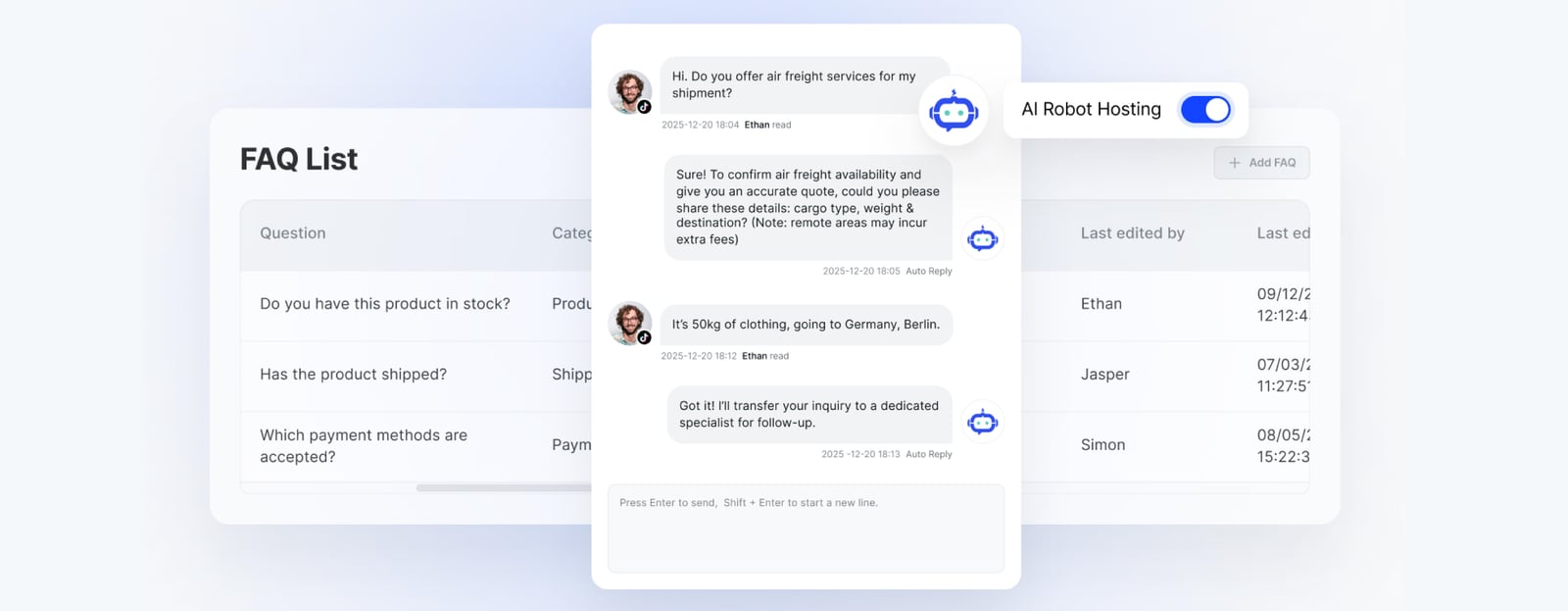
SaleSmartly product interface.
HubSpot Customer Platform: The Revenue Engine with Service Built In
HubSpot positions itself as an agentic customer platform that connects marketing, sales, and service on one Smart CRM. The core idea is that every customer interaction, from the first ad click to a support ticket, lives in the same record. That makes HubSpot especially attractive for teams where support is tightly linked to sales and marketing.
Key strengths:
- Unified CRM foundation. Every conversation, deal, and ticket attaches to a single contact record, giving sales and support the same context.
- AI tools via Breeze. HubSpot's Breeze layer automates content creation, data enrichment, and routine support tasks across the platform.
- Free tools to start. HubSpot offers free tiers for CRM, forms, live chat, and basic email, which lowers the entry barrier for small teams.
- Broad business scope. With Marketing Hub, Sales Hub, and Service Hub, HubSpot can replace several point tools at once.
The trade-off is depth in any single area. HubSpot's Service Hub is capable, but teams with complex ticketing, SLA management, or workforce optimization needs may find it less specialized than a dedicated support platform.
Zendesk: The AI-First Support Resolution Platform
Zendesk is built for customer service teams first. Its value proposition centers on moving beyond simple deflection to actual resolution, with AI agents that learn from every interaction through what Zendesk calls the Resolution Learning Loop. The platform unifies data and workflows across systems, then layers analytics, quality assurance, and workforce management on top.
Key strengths:
- Self-improving AI agents. Zendesk's AI learns from each resolved conversation, aiming for up to 80% automation without sacrificing quality.
- Enterprise-grade operations. Workforce management, QA, and advanced analytics are native, not bolt-ons.
- Proven scale. Zendesk reports 22,000+ AI customers, 830 million AI interactions, and 4.8 billion resolutions delivered.
- Strong compliance posture. SOC 2 and ISO 27001 certifications, plus recognition in the 2025 Gartner Magic Quadrant for CRM Customer Engagement Center, make Zendesk a safe choice for regulated industries.
The trade-off is complexity and cost. Zendesk's power comes with a learning curve, and pricing scales quickly as you add AI features and advanced seats.
SaleSmartly: The Cross-Border Messaging Specialist
SaleSmartly is an AI-powered omnichannel customer communication platform aimed at cross-border businesses. Instead of trying to be a full CRM or an enterprise ticketing system, it focuses on doing one thing exceptionally well: bringing messaging channels like WhatsApp, Facebook Messenger, Instagram, Telegram, LINE, Email, VKontakte, WeChat, Zalo, and YouTube into one interface.
Key strengths:
- Deep messaging channel coverage. SaleSmartly supports 10+ channels in a unified inbox, including channels that are critical in specific regions but often missing from Western-first platforms.
- Real-time translation in 134 languages. This is a standout feature for cross-border teams that need agents and customers to communicate across language barriers without leaving the conversation.
- Built-in CRM and automation. The platform includes a lightweight CRM, automation rules, and chatbot building without requiring a separate CRM subscription.
- Freemium pricing. With a free tier and paid plans starting at $12.72/month, SaleSmartly is accessible for SMBs and scaling teams.
- Security certifications. ISO 27001, ISO 27701, and CCRC certifications support its credibility for businesses handling customer data across borders.
The trade-off is breadth outside messaging. SaleSmartly does not attempt to replace a full marketing automation suite or an enterprise workforce management system. Teams that need those capabilities will need to integrate or choose a different primary platform.
Head-to-Head Comparison
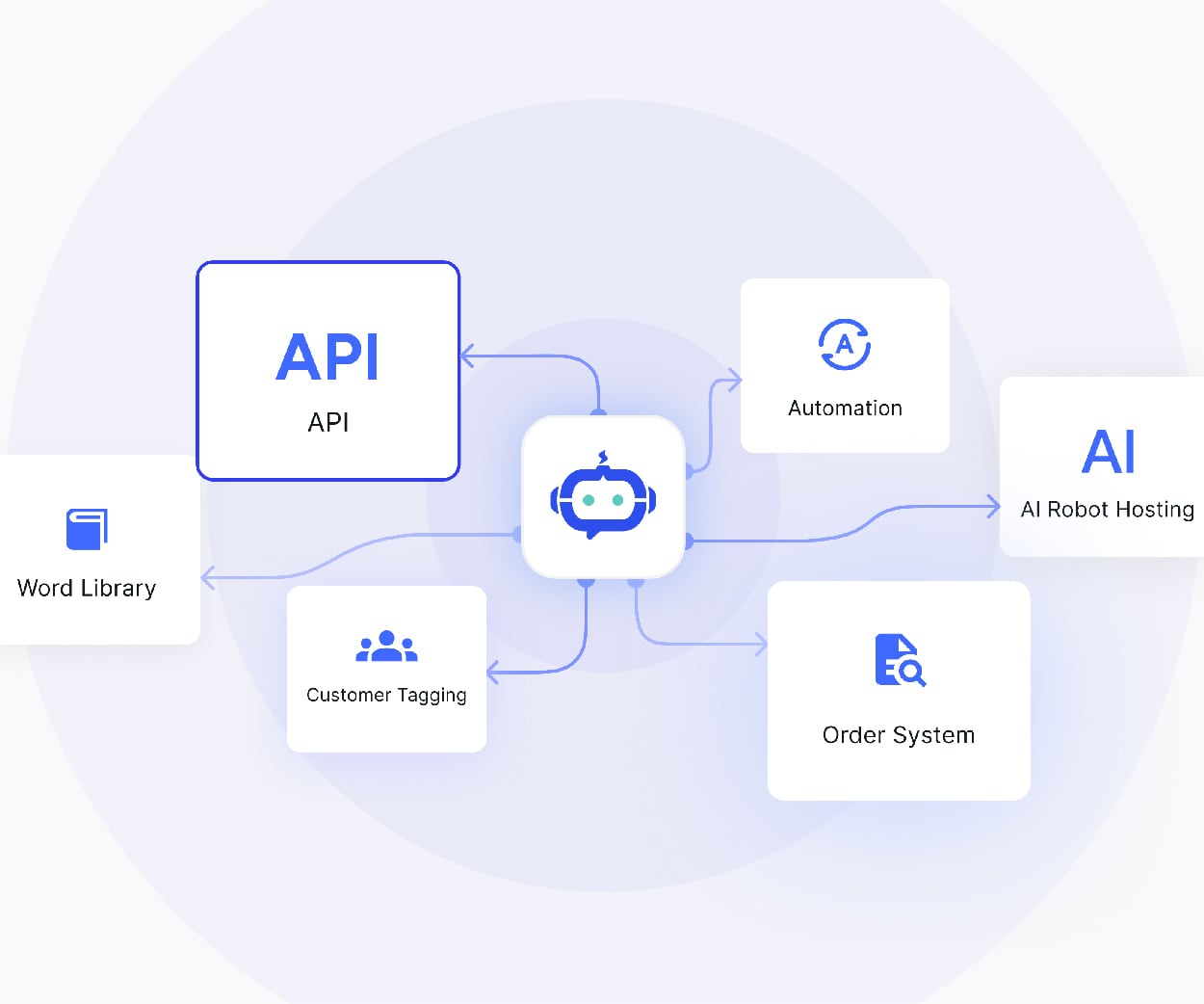
SaleSmartly product interface.
Omnichannel Reach and Messaging Depth
All three platforms support omnichannel communication, but the channel mix differs significantly.
- SaleSmartly covers WhatsApp, Facebook Messenger, Instagram, Telegram, LINE, Email, VKontakte, WeChat, Zalo, and YouTube. This is unusually broad and includes channels that matter in Southeast Asia, Latin America, Eastern Europe, and China.
- Zendesk supports email, live chat, voice, and social messaging through its unified agent workspace. The channel list is strong for traditional support, but regional messaging apps may require marketplace integrations.
- HubSpot connects email, live chat, and social channels through the Smart CRM, with WhatsApp available through integrations. Its strength is less about channel breadth and more about connecting conversations to the CRM record.
For teams whose customers primarily use WhatsApp, Instagram, or Telegram, SaleSmartly's native depth on those channels is a practical advantage. For teams that need voice and email at scale, Zendesk is the stronger choice.
AI Agents and Automation
AI is now table stakes, but the implementation philosophy differs.
- Zendesk takes the most aggressive AI-first approach. Its Resolution Learning Loop means AI agents improve continuously, and the platform targets up to 80% automation. This is compelling for high-volume support teams that want to deflect and resolve without human intervention.
- HubSpot embeds AI through Breeze across marketing, sales, and service. The AI is useful but spread across the entire platform rather than optimized for support resolution alone.
- SaleSmartly combines human-led support with AI agents to automate conversations and reduce response times. The AI is oriented toward messaging automation, chatbots, and routing rather than full enterprise resolution workflows.
If your primary goal is maximum AI-driven resolution in a support environment, Zendesk leads. If you want AI that assists across the entire customer journey, HubSpot is compelling. If you want AI that automates chat conversations across many messaging channels at an accessible price, SaleSmartly fits.
Multilingual Support and Cross-Border Fit
This is where SaleSmartly has the clearest supported advantage.
SaleSmartly includes real-time translation in 134 languages, which means an English-speaking agent can chat with a Spanish-speaking customer in WhatsApp without copying text into a separate translator. For cross-border e-commerce, B2B inquiry management, and international support teams, this feature alone can justify the platform choice.
HubSpot and Zendesk both support multiple languages in their interfaces and content, but neither positions real-time, in-conversation translation across 134 languages as a core differentiator in the same way. Teams that operate primarily in one or two languages may not notice the difference. Teams that sell into dozens of countries will.
CRM Depth and Revenue Alignment
- HubSpot is the clear winner here. Its Smart CRM is the backbone of the entire platform, connecting marketing, sales, and service data in one place. If support needs to feed directly into sales pipelines and marketing campaigns, HubSpot is the natural choice.
- Zendesk offers customer context and integrations with major CRMs, but it is not a CRM itself. Teams typically pair Zendesk with Salesforce, HubSpot, or another CRM.
- SaleSmartly includes a built-in CRM, but it is lightweight compared to HubSpot. It stores contact history, conversation context, and tags, which is enough for messaging-led teams, but it does not replace a full sales CRM.
Pricing and Accessibility
Pricing models vary significantly:
- SaleSmartly uses a freemium model with paid plans starting at $12.72/month. This makes it the most accessible for small teams and startups that need omnichannel messaging without a large upfront investment.
- HubSpot offers free tools, but paid plans scale quickly as you add Marketing, Sales, and Service Hubs. The free tier is generous for basic CRM and chat, but advanced features require paid seats.
- Zendesk is positioned for serious support teams, and pricing reflects that. Entry-level plans exist, but the AI features and workforce management tools that make Zendesk compelling sit in higher tiers.
For budget-conscious teams, SaleSmartly and HubSpot's free tools are the easiest entry points. For enterprises that can justify the investment, Zendesk's depth often pays for itself through automation.
Practical Scenarios: Which Platform Fits?

SaleSmartly product interface.
Scenario 1: A Cross-Border E-commerce Brand
You sell on Shopify and receive customer messages through WhatsApp, Instagram, and Facebook Messenger from customers in 20+ countries. Your agents speak English and Spanish, but customers write in Portuguese, French, and German.
Recommendation: SaleSmartly. The native channel coverage and 134-language real-time translation directly solve your core workflow. The built-in CRM keeps customer context without requiring a separate system, and the freemium pricing lets you start without risk. For a deeper look at how SaleSmartly compares with other chat-focused tools, see our SaleSmartly vs LiveChat vs Zendesk comparison.
Scenario 2: A Scaling SaaS Company with Sales-Led Growth
Your support team handles email and live chat, but every ticket should inform the sales pipeline. Marketing runs campaigns, sales works deals, and support resolves issues, all on the same customer records.
Recommendation: HubSpot Customer Platform. The unified Smart CRM is the deciding factor. Support conversations become visible to sales, marketing can trigger campaigns based on service history, and one system replaces three. If you are also evaluating HubSpot against messaging-focused alternatives, our SaleSmartly vs HubSpot vs Respond.io comparison adds useful context.
Scenario 3: A Large Support Organization with Complex Operations
You run a 200-agent support team across voice, email, chat, and social. You need workforce management, quality assurance, SLA tracking, and AI that can resolve a meaningful share of tickets without human help.
Recommendation: Zendesk. The Resolution Learning Loop, native WFM and QA, and enterprise compliance posture are built for exactly this environment. Zendesk's 2025 Gartner Magic Quadrant recognition and SOC 2/ISO 27001 certifications also matter if you operate in regulated industries.
Scenario 4: A Small Team That Wants to Start Free
You are a five-person team that needs a shared inbox for WhatsApp and Instagram, basic automation, and a simple CRM. Budget is tight.
Recommendation: SaleSmartly or HubSpot free tools. SaleSmartly's freemium plan covers the messaging use case directly. HubSpot's free CRM and chat tools work if you also want basic marketing and sales features. If you are comparing budget-friendly chat platforms more broadly, our SaleSmartly vs Olark vs tawk.to comparison explores the low-cost landscape.
Decision Framework: Three Questions to Ask
Before you commit, answer these three questions:
Where do your customers actually message you? If the answer is WhatsApp, Instagram, Telegram, or LINE first, prioritize a platform with native depth on those channels. If the answer is email and voice, a traditional support platform may serve you better.
How tightly does support need to connect to sales and marketing? If support is a standalone function, a dedicated support or messaging platform works. If support feeds directly into revenue operations, a unified CRM platform like HubSpot is hard to beat.
What is your realistic budget and implementation capacity? Zendesk delivers enterprise power but requires investment and setup. HubSpot scales with your stack but can become expensive across multiple hubs. SaleSmartly offers the lowest entry cost for messaging-focused teams.
Related reading
- SaleSmartly vs Tidio vs Intercom: Which Chat Platform Wins? - Compare SaleSmartly, Tidio, and Intercom on AI agents, omnichannel reach, multilingual support, pricing, and cross-border fit. Find your best match.
Sources and further reading
- Top SaleSmartly Alternatives - WebCatalog - HubSpot is a CRM platform that integrates marketing, sales, and customer service tools to help businesses manage relationships and streamline operations.
- What platforms, app and technologies are tracked? - Store Leads - The platform for ecommerce data.
- Selibeng.com - NEW: Sales Assistance https://selibeng.com/sales-assistance Selibeng.com
FAQ
Is SaleSmartly a good alternative to Zendesk?
It depends on your use case. SaleSmartly is a strong alternative if your support is messaging-led, especially across WhatsApp, Instagram, Telegram, and other chat apps, and if you need real-time translation for cross-border conversations. Zendesk remains the stronger choice for large teams that need advanced ticketing, workforce management, and enterprise AI resolution at scale.
Is HubSpot a good alternative to Zendesk?
HubSpot can replace Zendesk for teams that want service, sales, and marketing in one system and do not need Zendesk's deep workforce management or QA features. However, large support organizations with complex SLAs and high automation targets often find Zendesk's specialization worth the separate investment.
Which platform is best for WhatsApp-first businesses?
SaleSmartly has the deepest native WhatsApp focus among the three, with specialized solutions for WhatsApp private-domain marketing and click-to-message ad conversion. Zendesk and HubSpot both support WhatsApp, but typically through integrations rather than as a core product focus.
Does SaleSmartly offer a free plan?
Yes. SaleSmartly uses a freemium model, with paid plans starting at $12.72/month. This makes it accessible for small teams and startups that want omnichannel messaging without a large upfront cost.
Which platform has the best AI for customer service?
Zendesk leads in AI-driven resolution for support teams, with self-improving AI agents and a stated target of up to 80% automation. HubSpot's Breeze AI is strong across the full customer journey, while SaleSmartly's AI is optimized for messaging automation and chatbot-driven conversations.
Conclusion
SaleSmartly, HubSpot Customer Platform, and Zendesk are all capable platforms, but they solve different problems. HubSpot is the best choice when support must live inside a unified revenue engine. Zendesk is the best choice when support is a large, complex operation that needs AI resolution, workforce management, and enterprise compliance. SaleSmartly is the best choice when your business communicates with customers across borders and messaging channels, and you need real-time translation, broad channel coverage, and accessible pricing without the overhead of a full CRM or enterprise help desk.
The right decision starts with your customers' preferred channels and your team's operational reality. Choose the platform that matches how you actually work, not the one with the longest feature list.