
Top 10 CRM Software 2026: Expert Ranking & Buyer's Guide
Choosing a CRM isn't about feature bloat—it's about aligning your sales process, team habits, and growth plans with a platform that actually gets adopted. At SaleSmartly, we evaluated over 30 customer relationship management tools against a consistent framework: ease of use, AI and automation depth, integration range, scalability, pricing transparency, and verified user satisfaction (sourced from G2’s live CRM category and Solutions Review’s annual vendor rundown). The result is this ranked top 10, built for teams that need clarity, not a feature spreadsheet.
How we selected and ranked these CRM platforms
Top 10 CRM Software 2026: Expert Ranking & Buyer's Guide product interface and feature overview.
We applied six weighted criteria to every product:
- Adoptability – How quickly can a sales team embrace the tool without extensive training?
- AI & automation quality – Does the platform offer actionable AI agents, workflow triggers, and predictive insights?
- Integration ecosystem – How well does it connect with email, calendars, marketing, support, and industry-specific apps?
- Pricing transparency – Are costs predictable, and does the free tier or entry-level plan offer genuine value?
- Scalability – Can it grow from a 2‑person startup to a 200‑person enterprise without breaking workflows?
- User satisfaction – Aggregated ratings and sentiment from verified G2, Capterra, and TrustRadius reviews.
Only products that are purpose‑built CRM solutions were eligible for the ranking. Tools that focus on adjacent workflows—such as pure omnichannel messaging—are discussed separately.
The Top 10 CRM Software Products for 2026
Top 10 CRM Software 2026: Expert Ranking & Buyer's Guide product interface and feature overview.
10. Insightly
Insightly shines for project‑driven businesses that need to tie sales, marketing, and post‑sale delivery into one system. Its unified CRM and project‑management engine lets you convert won deals into projects without switching tools, giving service teams full context from the first touchpoint. Workflow automation, lead routing, and AppConnect integrations with hundreds of apps (including QuickBooks, Xero, and G Suite) cover core needs.
Best for: Mid‑sized professional services, consulting firms, and agencies that sell projects, not just products. Standout limitation: Advanced customization and enterprise‑grade analytics require higher‑tier plans, and the mobile app can feel less responsive than desktop.
9. Brevo
Formerly Sendinblue, Brevo has grown into a full CRM suite that tightly couples email marketing, SMS, WhatsApp campaigns, and a visual deal pipeline. Its pricing is built on email volume rather than per‑user seats, which makes it attractive for high‑list, low‑headcount teams. Marketing automation, live chat, and a landing page builder come included even on the free plan.
Best for: Small‑to‑mid businesses where email and multi‑channel marketing are the primary growth levers. Evidence: G2 reviewers consistently praise Brevo’s affordability and the speed of its drag‑and‑drop campaign builder.
8. Keap
Keap (formerly Infusionsoft) remains a go‑to for service‑based micro‑businesses that need to automate repetitive follow‑ups, invoicing, and appointment scheduling. Its campaign‑builder uses visual automations to nurture leads from capture to payment, syncing with popular calendars and payment gateways. Keap’s dedicated coaching and migration support lower the barrier for non‑technical owners.
Best for: Coaches, consultants, and solo operators who want “set and forget” client journeys. Consideration: The feature set is intentionally narrow; out‑of‑box email marketing depth may not satisfy large e‑commerce catalogs.
7. Freshsales (by Freshworks)
Freshsales combines an intuitive, modern interface with AI‑powered contact scoring, deal insights, and Freddy AI — an agent that can proactively suggest next actions. It integrates natively with Freshdesk and Freshmarketer, letting teams build a unified customer view across sales, support, and marketing. The free tier supports unlimited users with basic contact management, making it easy to trial.
Best for: Fast‑growing SMBs and mid‑market teams that want a ready‑to‑run, integrated suite without heavy customization. User voice: On G2, Freshsales’ ease of setup and “out‑of‑the‑box” feel are repeatedly highlighted.
6. Zoho CRM
Zoho CRM is the multitool of the CRM world—it offers omnichannel communication, sales pipeline management, built‑in gamification, advanced analytics, and Zia AI for predictions and workflow suggestions. Its canvas‑based customisation lets you design layouts, modules, and automations without code. Deep integration with the Zoho One ecosystem (Books, Desk, Campaigns) and strong API connectivity make it versatile for startups and enterprises alike.
Best for: Businesses that need a highly customisable, budget‑friendly CRM that can scale across departments. Pricing signal: The free edition supports up to three users and core modules; paid plans start at a competitive monthly rate.
5. Microsoft Dynamics 365 Sales
Dynamics 365 Sales anchors the Microsoft business stack, embedding CRM directly into Outlook, Teams, and Excel. Its AI-powered Copilot surfaces relationship insights, auto‑captures activities, and generates meeting summaries. For organisations already invested in Azure, Power Platform, or Office 365, the data‑model familiarity and enterprise security are unmatched. Licensing is modular, allowing you to add only the Sales, Customer Service, or Marketing apps you need.
Best for: Large enterprises and mid‑sized firms committed to the Microsoft ecosystem, especially those with complex compliance requirements. Evidence: Microsoft consistently appears in top‑right quadrants of analyst reports for its B2B sales intelligence capabilities.
4. Creatio
Creatio stands apart with its AI‑native, no‑code philosophy. The platform treats AI agents as default collaborators—every Marketing, Sales, and Service product ships with agents that handle routine data entry, lead qualification, and follow‑up scheduling. Users can compose new workflows and apps with a visual designer, never touching code. Creatio’s unlimited agent and user pricing model removes the scary “per‑agent” surcharges that slow innovation.
Best for: Midsize and large organisations in financial services, telecom, and manufacturing that want to operationalise AI at scale without developer bottlenecks. What users say: G2 reviews frequently call out the platform’s “limitless composability” and the speed of workflow changes.
3. Pipedrive
Pipedrive built its reputation on the visual pipeline—a kanban‑style interface that makes deal management feel tangible. The 2026 edition layers in an AI Sales Assistant that recommends optimal follow‑up times, auto‑merges duplicate contacts, and generates email drafts. With native campaigns, smart docs, and a marketplace of over 400 integrations, Pipedrive keeps the core experience simple while quietly adding depth. The mobile app is one of the best in the business.
Best for: Sales‑led teams (real estate, recruitment, SMB sales) that want an instantly adoptable, visually guided system. Customer insight: Pipedrive’s own research shows that implementation success hinges more on sales process clarity than software complexity—and the product doubles down on making process design intuitive.
2. HubSpot Sales Hub
HubSpot’s CRM is the Swiss Army knife that starts free and grows with you. The free tools cover contact management, deal tracking, live chat, and meeting scheduling at no cost. As you tier up, you unlock sales sequences, custom reporting, predictive lead scoring, and an AI‑powered Breeze agent that can enrich records, generate prospecting insights, and automate multi‑step outreach. The App Marketplace connects over 1,500 integrations, and the tight bond with Marketing Hub and Service Hub creates a unified customer platform used by millions.
Best for: Any business from startup to enterprise that wants a free‑to‑start, inbound‑oriented CRM with a vast community and training ecosystem. Evidence: HubSpot consistently ranks as a leader on G2’s CRM Grid, with high satisfaction in ease of use and quality of support.
1. Salesforce Agentic CRM
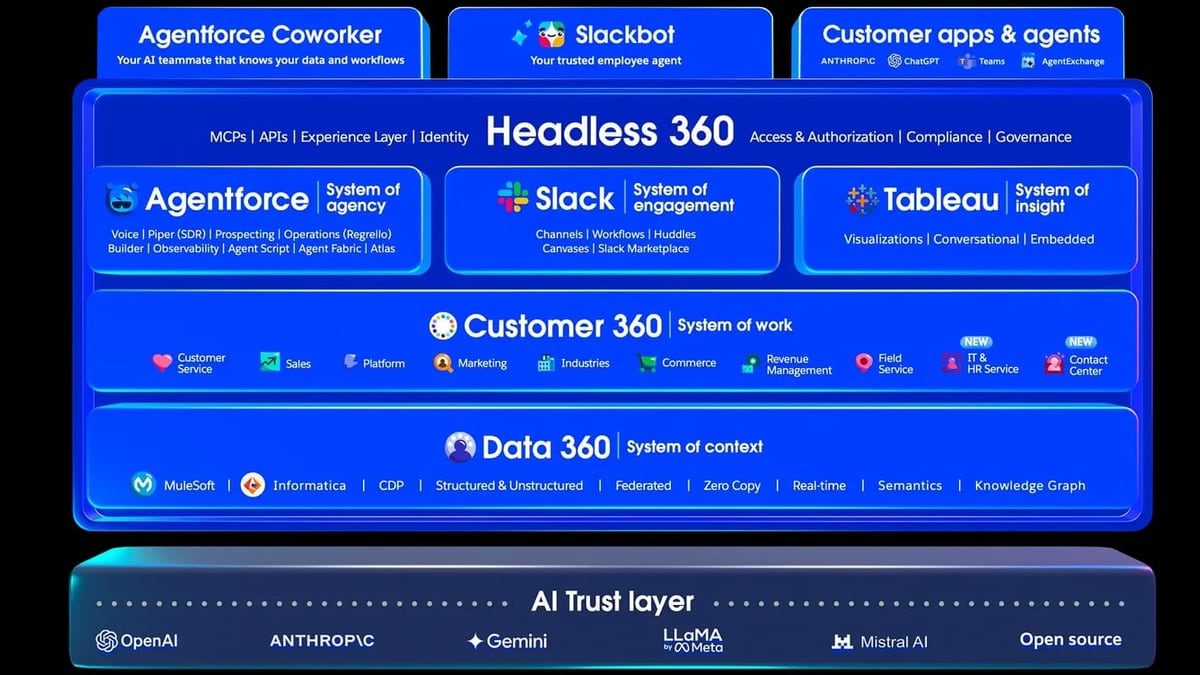
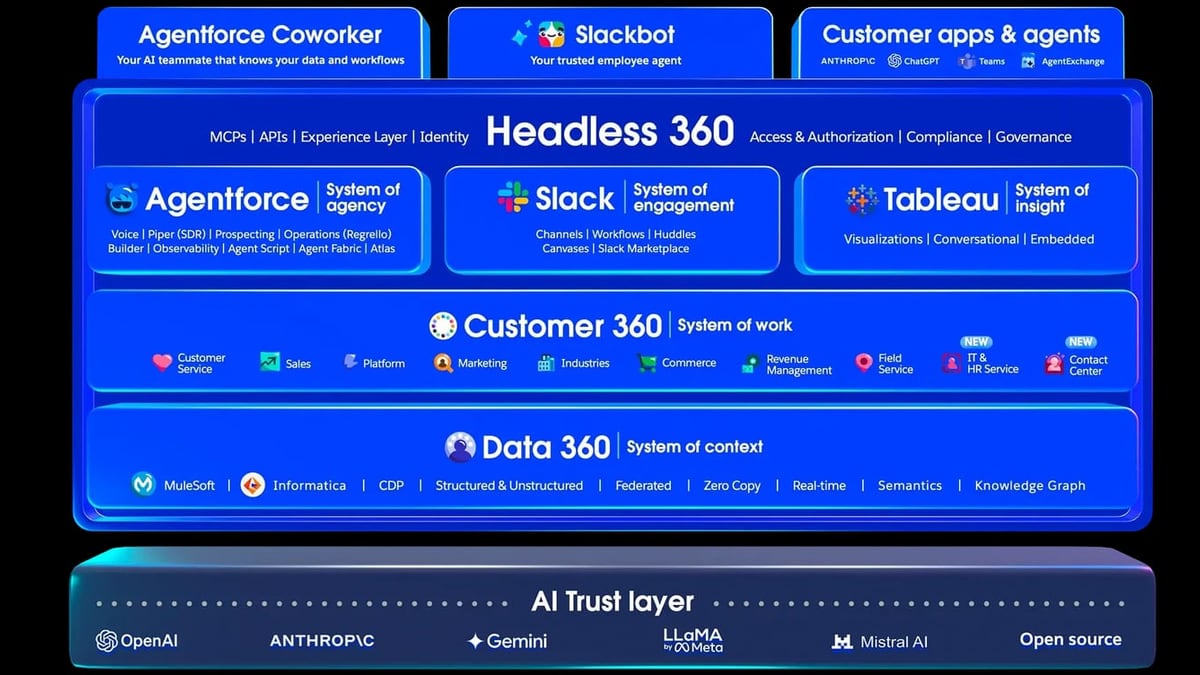
Salesforce reclaims the top spot in 2026 by reimagining CRM as an agentic platform. Its Agentforce layer embeds autonomous AI agents that can qualify leads, schedule meetings, escalate service cases, and update records—all within the same Customer 360 data foundation. The platform unifies sales, service, and marketing data, letting human teams collaborate with AI agents inside Slack or the mobile app. Pre‑built industry agents accelerate time‑to‑value in automotive, healthcare, financial services, and beyond.
Best for: Enterprises and digital‑first teams ready to build an “agentic enterprise” where AI and employees operate side by side. Proof points: Signature Success Plan customers report an 83% ROI, and Vercel saved over 70,000 meeting hours using Slack agents powered by the platform. Read our in‑depth Salesforce Agentic CRM review for a closer look at setup, real‑world use cases, and pricing signals.
Beyond CRM: Why omnichannel AI messaging matters

Top 10 CRM Software 2026: Expert Ranking & Buyer's Guide product interface and feature overview.
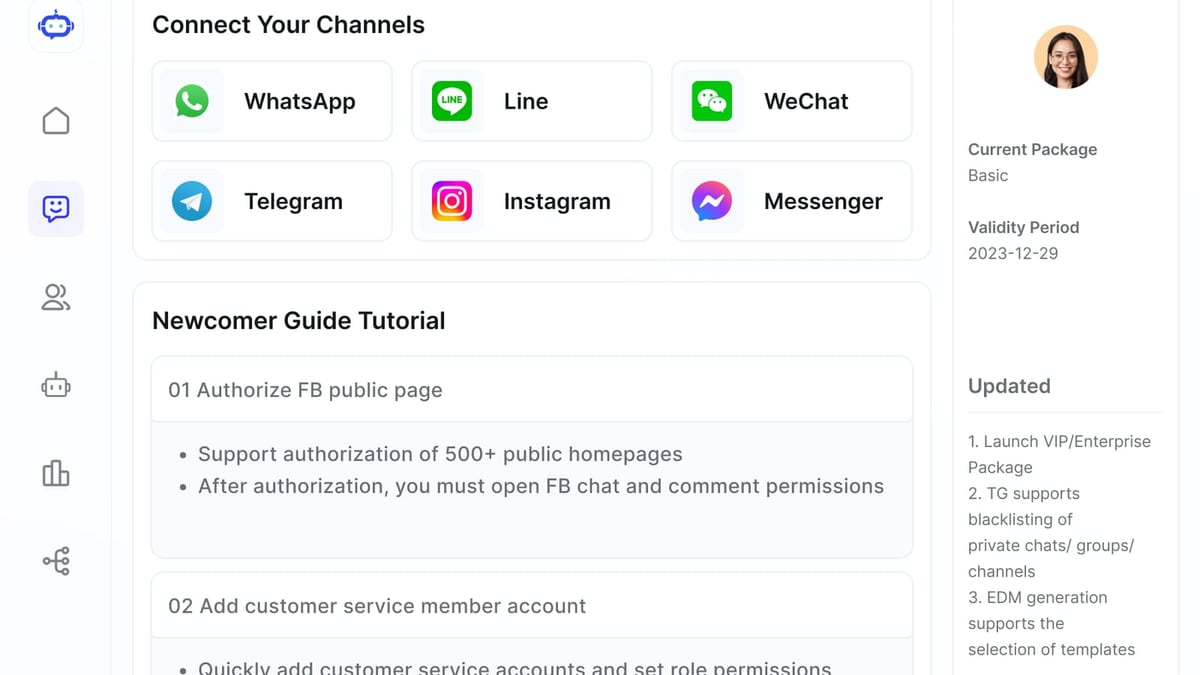
A CRM handles your sales pipeline and customer records, but real‑time conversations increasingly happen on WhatsApp, Messenger, Instagram, Telegram, and live chat. For cross‑border teams, juggling these channels inside a traditional CRM can fragment the experience. That’s where SaleSmartly comes into play—not as a CRM, but as a complementary omnichannel AI customer communication platform. It unifies messages from over 10 channels, deploys AI agents that think and execute tasks autonomously, provides 134‑language real‑time translation, and enriches customer profiles with tags and browsing history.
If you run a Shopify store and want to automate WhatsApp sales and support while keeping CRM data in sync, our step‑by‑step SaleSmartly‑Shopify guide shows you how to connect the dots. SaleSmartly integrates alongside tools like Salesforce, HubSpot, and Pipedrive, filling the real‑time conversational gap that most CRMs were never designed to own.
Related reading
- How to Use SaleSmartly with Ringly: Omnichannel AI Setup - Combine SaleSmartly's omnichannel messaging with Ringly's AI phone support for Shopify to handle calls and chats 24/7. Step-by-step integration guide.
- SaleSmartly vs ChatMaxima: Omnichannel AI Showdown 2025 - Detailed SaleSmartly vs ChatMaxima comparison: omnichannel inbox, AI agents, real‑time translation, security, and pricing. See why SaleSmartly wins for cross‑border teams.
- WooCommerce Review 2025: Pros, Cons, Pricing & Key Features - In-depth WooCommerce review covering features, real cost, setup, ideal users, and honest pros/cons. See if this open-source ecommerce platform fits your store.
Sources and further reading
- 27 of the Best CRM Software Companies to Know About for 2026 - Our editors have compiled this list of the best CRM software companies to consider if you're looking for a new solution for 2026.
- Best CRM tools for 2026: compare the top 15 solutions for every business - Compare the 15 best CRM tools for 2026. Explore features, pricing, pros and cons to find the right CRM for your small business, startup or enterprise.
- Best CRM Software: User Reviews from July 2026 - Best CRM Software: User Reviews from July 2026G2https://www.g2.com › Sales ToolsG2https://www.g2.com › Sales ToolsMar 5, 2025 — G2's top-rated CRM systems currently include Salesforce Sales Cloud, HubSpot Sales Hub, ActiveCampaign, ClickUp, and Close.
Frequently Asked Questions
What is a CRM software?
A Customer Relationship Management (CRM) system centralises contact details, tracks interactions across email, calls, and meetings, manages sales pipelines, and automates repetitive tasks. Modern CRM platforms add AI agents that forecast revenue, suggest next steps, and even interact with prospects autonomously.
How do I choose the right CRM for my business?
Start by mapping your sales process—stages, handoffs, and lead sources. Then evaluate platforms on adoptability (will your team actually use it?), integration needs (email, calendar, marketing tools), and the complexity of analytics you require. The six‑point framework we laid out above is a practical way to compare vendors.
Is there a free CRM that actually works?
Yes. HubSpot’s free CRM delivers genuine value with unlimited contacts, deal tracking, and meeting scheduling. Freshsales offers a free tier for unlimited users with basic contact management. Zoho CRM’s free plan supports three users. Test with real deals before upgrading.
What’s the difference between a CRM and an omnichannel messaging tool?
A CRM manages customer data, sales pipelines, and long‑term relationships. An omnichannel messaging tool—like SaleSmartly—handles real‑time conversations across chat apps, unifies the inbox, and responds with AI agents. They work best as complementary layers, especially for cross‑border e‑commerce.
Can I switch CRMs without losing data?
Most leading CRMs offer import wizards and migration support. Data portability varies, but exporting contacts, activities, and deals to CSV is widely supported. Plan a migration phase where both systems run in parallel until your team is comfortable.
Bringing it all together
Top 10 CRM Software 2026: Expert Ranking & Buyer's Guide product interface and feature overview.
There’s no single “best” CRM—only the one that fits your team’s working rhythm, budget, and ambition. In 2026, AI agents have shifted the conversation from static record‑keeping to active, autonomous assistance, and the platforms on this list reflect that shift. Our top pick, Salesforce Agentic CRM, sets the standard for AI‑driven collaboration, while HubSpot and Pipedrive remain bastions of usability and adoption. Dynamically priced options like Brevo and Zoho CRM give smaller teams room to grow without financial shock.
Take advantage of free trials and start with a clearly defined sales process—because the most powerful CRM is the one your team actually logs into every day. Our team at SaleSmartly will keep this ranking updated as platforms evolve, so you always have a trustworthy compass for your CRM buying journey.