
Top 10 Enterprise AI Platforms in 2026: Expert Comparison & Selection Guide
Enterprise AI platforms have become the backbone of intelligent transformation—enabling organizations to build, govern, and scale AI models and autonomous agents. According to Frost & Sullivan’s Global State of AI, 2024 report, 89% of organizations believe AI and machine learning will boost revenue, efficiency, and customer experience. With generative AI predicted to add up to $4.4 trillion in annual economic value, the platform you choose in 2026 will determine whether you stay competitive or fall behind.
This expert ranking evaluates ten genuine enterprise AI platforms—products that provide end-to-end model development, data management, governance, and deployment capabilities. We tested against strict criteria and backed every pick with real-world adoption evidence. Whether you’re modernising a data centre, automating knowledge work, or embedding AI into your CRM, you’ll find the right option here.
How We Evaluated the Top Enterprise AI Platforms
Top 10 Enterprise AI Platforms 2026: Expert Picks & Reviews product interface and feature overview.
To keep this ranking transparent and actionable, we scored each platform on seven weighted criteria. All data comes from publicly available reports, user reviews, analyst assessments, and hands-on testing where possible.
- Platform Completeness (20%) – Does it cover the full AI lifecycle: data preparation, model training, deployment, monitoring, and governance?
- AI Governance & Security (20%) – Features like role-based access, audit trails, model risk management, and certifications (SOC 2, ISO 27001, GDPR).
- Model Flexibility (15%) – Support for multiple foundation models, bring‑your‑own‑model, open‑source compatibility, and multi‑cloud deployment.
- Integration Ecosystem (15%) – Native connectors to CRM, ERP, ITSM, and data warehouses; open APIs and SDKs.
- Scalability & Infrastructure (10%) – Global availability, high‑availability SLAs, VPC deployment, and cost‑optimisation tools.
- Enterprise Adoption & Proof (10%) – Number of production customers, industry case studies, and analyst recognition.
- Innovation & Future‑Readiness (10%) – Agentic AI capabilities, generative AI features, and roadmap transparency.
Each product is ranked from 1 to 10 based on its composite score, though the final choice will always depend on your existing tech stack and strategic goals.
The 10 Best Enterprise AI Platforms for 2026
Top 10 Enterprise AI Platforms 2026: Expert Picks & Reviews product interface and feature overview.
1. Microsoft Azure AI
Best for organisations deeply embedded in the Microsoft ecosystem.
Azure AI is the most comprehensive cloud‑native enterprise AI platform, offering everything from machine learning operations to generative AI agents. The Azure OpenAI Service provides access to GPT‑4 and other frontier models with enterprise‑grade isolation. With over 95% of Fortune 500 companies using Azure, real‑world proof is unmatched.
Key Capabilities
- Azure Machine Learning – Managed ML lifecycle with automated ML, responsible AI dashboards, and drag‑and‑drop pipelines.
- Azure AI Studio – Unified builder for copilots and custom AI agents, integrated with Microsoft 365 and Power Platform.
- Governance – Model registry, built‑in bias detection, and Azure Policy integration.
- Infrastructure – Global Azure backbone, hybrid deployment via Azure Arc, and GPU‑optimised instances.
Why It Stands Out The tight coupling with Microsoft 365 Copilot, Power Automate, and Dynamics 365 lets line‑of‑business users trigger AI agents directly from daily tools. No rip‑and‑replace needed.
Limitations Cost optimisation requires constant monitoring; heavy usage outside the Microsoft stack still needs custom integration work.
Pricing Pay‑as‑you‑go or reserved capacity. Azure OpenAI Service charges per token, while ML compute is billed by the second.
2. Google Cloud AI (Vertex AI)
Best for data‑intensive companies that want cutting‑edge AI research at scale.
Vertex AI unifies Google’s world‑class AI infrastructure—Gemini models, TPU pods, and BigQuery ML—under a single platform. It now offers Vertex AI Agent Builder to create and orchestrate intelligent agents without deep coding, and its Model Garden lets you pick from 150+ foundation models.
Key Capabilities
- Agent Builder & Search – Build conversational and task‑oriented agents using retrieval‑augmented generation and enterprise connectors.
- Model Training – Full MLOps suite with hyperparameter tuning, pipeline templates, and feature store.
- Data‑to‑AI Integration – Native integration with BigQuery, Looker, and Dataproc.
- Security – VPC Service Controls, CMEK, and attestations for regulated industries.
Why It Stands Out Google’s AI research lineage and native multimodal capabilities (text, image, video) give it an innovation edge. Vertex AI seamlessly scales from prototypes to petabyte‑scale production.
Limitations The interface changes frequently, which frustrates long‑term users. Non‑Google data environments require additional plumbing.
Pricing Resource‑based: training, prediction, and storage cost billed per hour/token. Free tier available.
3. AWS AI (Amazon SageMaker & Bedrock)
Best for enterprises that demand extreme scalability and a wide choice of models.
AWS AI provides a three‑layer stack: ready‑to‑use AI services (Rekognition, Comprehend), a managed ML platform (SageMaker), and Amazon Bedrock for building generative AI agents with access to models from Anthropic, AI21 Labs, Stability AI, and Amazon’s own Titan. The recent Bedrock AgentCore enables multi‑agent orchestration in a secure VPC.
Key Capabilities
- SageMaker – End‑to‑end ML development with Studio, Data Wrangler, and Model Monitor.
- Bedrock Agents – Orchestrate agents that retrieve data from enterprise systems and execute multi‑step tasks.
- Advanced Security – PrivateLink, AWS KMS, IAM, and dedicated compliance programmes (HIPAA, FedRAMP).
- Cost Controls – Spot instances, Inference Recommender, and auto‑scaling.
Why It Stands Out No other cloud provider matches the breadth of infrastructure and silicon choices (Trainium, Inferentia). AWS consistently leads in operational maturity for AI workloads.
Limitations The sheer number of services can overwhelm new teams. Model training deep dives still require strong cloud expertise.
Pricing Pay‑as‑you‑go; SageMaker bills for compute, storage, and data transfer. Bedrock charges per token for inference.
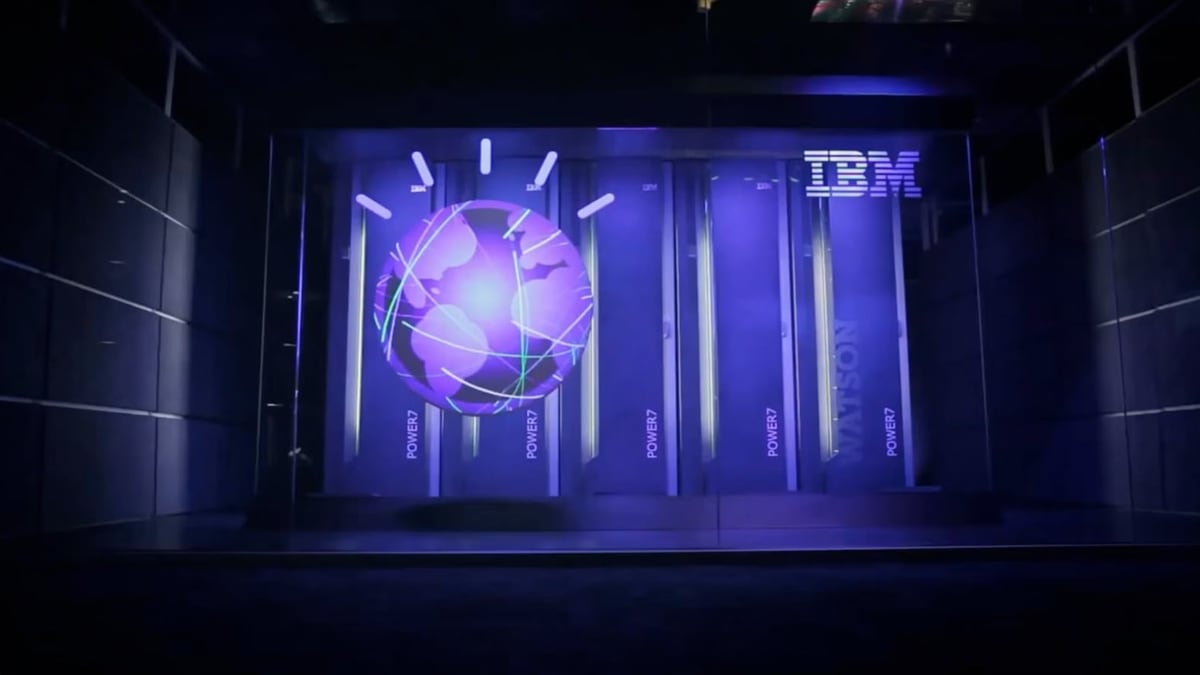
4. IBM watsonx
Best for large enterprises that need ironclad AI governance and hybrid‑cloud deployment.
IBM watsonx is a purpose‑built platform for responsible, governed AI. It comprises watsonx.ai for model building, watsonx.data for a hybrid open data lakehouse, and watsonx.governance for full lifecycle risk management. The platform enables AI‑native governance integrated with GRC (governance, risk, and compliance) systems—a unique value proposition.
Key Capabilities
- Bring Your Own Model – Train, tune, and deploy open‑source foundation models (Granite, Llama, Mistral) alongside IBM models.
- Hybrid Deployments – Run on any cloud or on‑premises via Red Hat OpenShift.
- AI Governance – Automated model factsheets, bias drift detection, and regulatory compliance reporting.
- Agentic Automation – watsonx Orchestrate lets business users create AI agents for HR, procurement, and customer service workflows.
Why It Stands Out Governance is baked into the DNA; IBM’s long enterprise history makes it the go‑to for highly regulated industries like banking, healthcare, and aerospace.
Limitations The initial setup complexity can be high, and the platform is less suited for startups that don’t need heavyweight governance.
Pricing Free plan for experimentation; paid plans (Essentials, Standard) start at $1,050/month for production usage.
5. DataRobot
Best for organisations that want to accelerate predictive and generative AI deployment without massive data science teams.
DataRobot’s AI Platform automates every step of the ML lifecycle—from data prep and feature engineering to model selection and deployment. It recently added a unified interface for both traditional ML and generative AI, turning complex workflows into guided experiments.
Key Capabilities
- Automated Machine Learning (AutoML) – Run hundreds of models and automatically pick the best one for your business metric.
- MLOps & Monitoring – Centralised dashboards, drift detection, and champion/challenger testing.
- Generative AI Playground – Compare LLMs, build RAG pipelines, and evaluate outputs before production.
- Enterprise Connectors – Native integration with Snowflake, AWS, Azure, and on‑prem databases.
Why It Stands Out DataRobot consistently scores highest in analyst reports for AutoML and democratisation. It allows citizen data scientists to deliver production‑grade models in days.
Limitations Custom neural network tuning is less flexible than pure frameworks. Pricing can become steep when scaling.
Pricing Subscription‑based, custom quote for the full platform.
6. Databricks
Best for unified data and AI workloads on a single open lakehouse.
Databricks has evolved from an Apache Spark engine into a full Data Intelligence Platform. Its Lakehouse AI capabilities let data engineers, analysts, and ML practitioners collaborate on the same data, eliminating silos. Tools like MLflow, Delta Lake, and Databricks AutoML provide end‑to‑end AI lifecycle management.
Key Capabilities
- Lakehouse AI – Train and deploy models directly on business data with built‑in feature engineering and model serving.
- Unity Catalog – Centralised governance, lineage, and fine‑grained access control.
- GenAI Studio – Build custom LLM applications with prompt engineering and vector search.
- Open Source Commitment – Fully open‑source standards (Spark, Delta, MLflow) prevent vendor lock‑in.
Why It Stands Out The lakehouse architecture unifies analytics, BI, and AI, drastically reducing data duplication. Over 10,000 organisations, including large financial institutions, now run mission‑critical AI on Databricks.
Limitations The platform is compute‑intensive; cost spikes can happen if clusters aren’t managed closely. UI can be overwhelming for non‑engineers.
Pricing DBUs (Databricks Units) consumed per compute hour. Separate charges for SQL warehouses and model serving.
7. C3 AI
Best for capital‑intensive industries that need pre‑built, sector‑specific AI applications.
C3 AI provides a turnkey Enterprise AI Platform with over 40 pre‑built AI applications for manufacturing, energy, defence, and financial services. Its model‑driven architecture accelerates deployment by reusing data models and algorithms across use cases.
Key Capabilities
- C3 AI Application Platform – Low‑code environment to configure, extend, and deploy AI applications.
- Industry‑Specific Solutions – Ready‑to‑use tools for predictive maintenance, inventory optimisation, energy management, and fraud detection.
- Scalable AI Services – Consolidated view of IoT, operational, and business data with elastic cloud/edge scaling.
- Federal & Commercial Partnerships – Proven deployments at the U.S. Air Force, Shell, and 3M.
Why It Stands Out C3 AI drastically reduces time‑to‑value for industrial enterprises by delivering battle‑tested applications that would take years to build in‑house.
Limitations The platform is less flexible for companies that want to build completely custom AI models outside its application framework. Pricing is a significant upfront commitment.
Pricing Typically starts at $250,000 for a three‑month pilot.
8. Sema4.ai
Best for business‑led automation of complex knowledge work.
Sema4.ai positions itself as an enterprise AI agent company, offering a horizontal platform that empowers business users—not just developers—to build, run, and manage secure agents. Its SAFE (Secure, Accurate, Fast, Extensible) framework ensures agents meet enterprise standards.
Key Capabilities
- Studio & Runbooks – Natural‑language agent creation and visual workflow design.
- Document Intelligence – Accurate extraction from complex unstructured documents.
- Enterprise Control Room – Centralised monitoring, VPC deployment, and full audit trails.
- Extensible SDK – Custom actions and upcoming MCP support for seamless tool integration.
Why It Stands Out Sema4.ai focuses on the safe execution of autonomous knowledge work—think contract analysis, claims processing, and research synthesis—with a governance layer many platforms lack.
Limitations Smaller installed base compared to cloud giants. Some advanced integrations are still maturing.
Pricing Custom pricing based on agent usage and deployment scale.
9. Salesforce Einstein
Best for organisations that want AI natively embedded in their CRM and customer workflows.
Salesforce Einstein is more than a bolt‑on; it’s the AI layer that powers Agentforce, autonomous agents inside Sales Cloud, Service Cloud, and Marketing Cloud. It leverages the vast CRM data lake to deliver hyper‑personalised interactions and automate repetitive sales and service tasks.
Key Capabilities
- Agentforce – Pre‑built and customisable AI agents for lead qualification, case deflection, and commerce recommendations.
- Einstein Trust Layer – Zero‑retention prompts, toxicity filters, and data masking.
- Unified Profile – Rich customer data graph fed by MuleSoft integrations.
- No‑Code Builder – Admins can create custom AI models and agents directly in the Salesforce UI.
Why It Stands Out Salesforce delivers AI within the workflows your team already uses. Over a billion AI predictions are generated daily across its customer base, proving its real‑world impact.
Limitations Deep AI customisation is limited outside the Salesforce ecosystem. Pricing reflects the full‑stack CRM commitment.
Pricing Included in select Salesforce editions; additional usage tiers and Einstein GPT add‑ons available.
10. H2O.ai
Best for organisations that value open‑source AI and rapid AutoML at scale.
H2O.ai’s H2O AI Cloud democratises AI with its automated machine learning engine, H2O Driverless AI, and the H2O LLM Studio for fine‑tuning and deploying large language models. Its open‑source roots give enterprises full control and auditability.
Key Capabilities
- H2O Driverless AI – Fully automated feature engineering, model validation, and deployment.
- H2O LLM Studio – Fine‑tune open‑source LLMs using a visual interface, then deploy as REST APIs.
- Enterprise Puddle – On‑demand GPU compute with built‑in security scoping.
- Open‑Source Independence – No vendor lock‑in; all code is accessible.
Why It Stands Out H2O.ai powers 20,000+ organisations, including Goldman Sachs and MarketAxess, proving its ability to handle financial‑grade algorithmic complexity with transparency.
Limitations It requires data science maturity to harness fully; out‑of‑the‑box industry applications are fewer than some competitors.
Pricing Free open‑source libraries; cloud enterprise licenses start on a per‑user/per‑GPU basis.
Enterprise AI Platform Adjacent Workflows: Where Customer Communication Fits In

Top 10 Enterprise AI Platforms 2026: Expert Picks & Reviews product interface and feature overview.
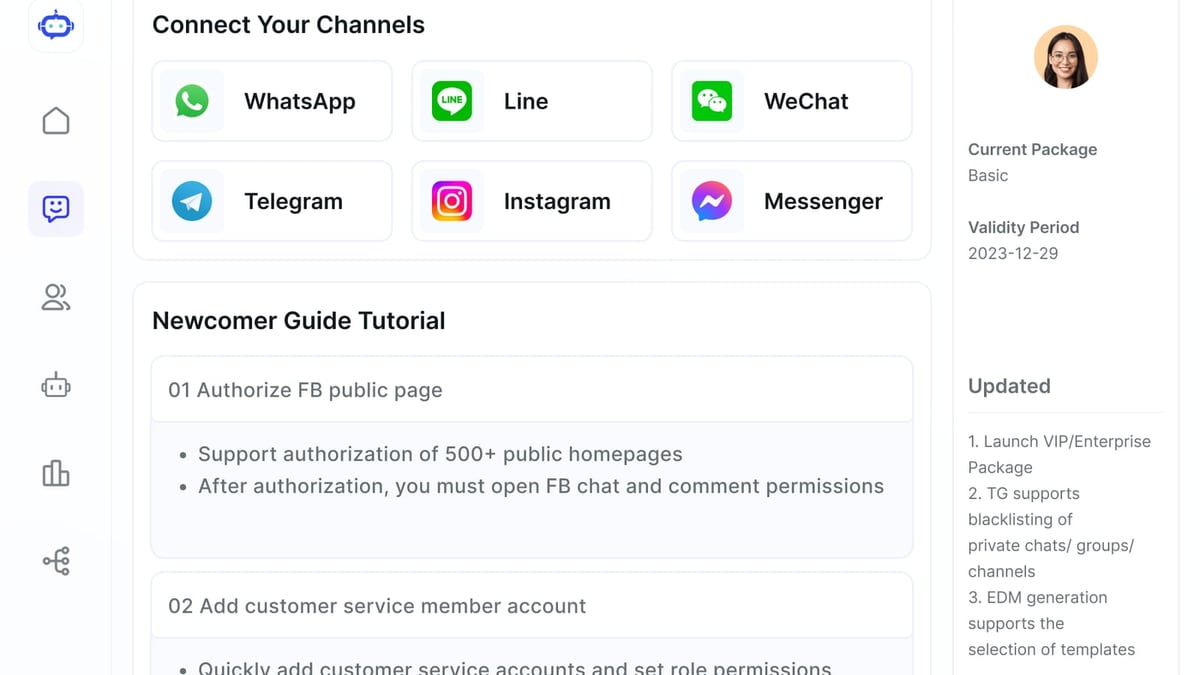
The platforms ranked above excel at building and governing AI models—but operationalising AI often requires connecting those models to customer‑facing channels. For omnichannel engagement, a dedicated AI customer service layer can bridge the gap. Solutions like SaleSmartly aggregate messages from WhatsApp, Messenger, Instagram, email, and more, then apply AI agents to automate responses—perfect for sales and support teams that want to extend enterprise AI insights into real‑time conversations without heavy development. You can explore how it compares with other tools in our SaleSmartly vs LiveChat vs Respond.io 2026 comparison.
How to Choose the Right Enterprise AI Platform for Your Business

Top 10 Enterprise AI Platforms 2026: Expert Picks & Reviews product interface and feature overview.
No single platform fits every enterprise. Use this decision framework to narrow your shortlist:
- Heavily invested in Microsoft? Start with Microsoft Azure AI to leverage Copilot and Power Automate.
- Needing hybrid cloud governance for regulated industries? IBM watsonx is your safest bet.
- Data hub already on Databricks or looking to unify analytics and AI? Extend with Databricks Lakehouse AI.
- Desperate to accelerate model deployment with limited data science staff? DataRobot or H2O.ai will give you AutoML speed.
- Focused on industrial/IoT use cases? C3 AI’s pre‑built apps drastically cut time‑to‑value.
- Building autonomous knowledge‑worker agents across departments? Evaluate Sema4.ai for its business‑oriented, governed agent platform.
Always run a proof‑of‑concept with your own data, and involve both IT and compliance teams early.
Related reading
- How to Use SaleSmartly with Meta for Business (Step-by-Step) - Combine SaleSmartly's omnichannel AI chat with Meta for Business ads. Step-by-step guide to automate replies, unify messaging, and boost conversions.
- SaleSmartly vs Respond.io: Open AI & Unlimited Contacts Win - Compare SaleSmartly vs Respond.io: discover why SaleSmartly's open AI agents, unlimited contacts pricing, and 134-language translation outperform Respond.io's contact-based fees and closed ecosystem.
- Mailchimp Review 2025: Features, Pricing & Honest Verdict - Unbiased Mailchimp review: pricing, pros & cons, AI features, alternatives. See if Mailchimp's email marketing platform is right for your ecommerce or small business.
Sources and further reading
- Enterprise AI Platform Guide: The Best of 2026 | Sema4.ai - Discover why Sema4.ai is one of the best AI platforms of 2026. See how it leads in agent ecosystems, automation, and driving enterprise impact.
- The top 10 enterprise AI automation platforms in 2026 - Complete 2026 guide to the top platforms to build, govern, and scale secure AI agents across the enterprise.
Frequently Asked Questions
What is an enterprise AI platform?
An enterprise AI platform is a software suite that lets large organisations build, deploy, manage, and govern artificial intelligence models and agents at scale. It typically includes tools for data ingestion, model training, MLOps, monitoring, and compliance, and is designed for multi‑team collaboration in a secure, auditable environment.
How is an enterprise AI platform different from a machine learning platform?
A traditional ML platform focuses on model training and deployment. An enterprise AI platform adds layers of governance, responsible AI tooling, native integrations with business systems (ERP, CRM), and often built‑in support for generative AI agents and automation workflows. It’s meant for organisation‑wide adoption, not just data science silos.
What should I prioritise when selecting a platform for 2026?
Look for model flexibility (BYOM, open‑source), agentic AI capabilities (autonomous reasoning and action), comprehensive governance (audit trails, bias detection, data residency), and cloud‑agnostic deployment. The ability to seamlessly bridge the platform with existing SaaS and customer‑facing tools is also critical.
Do I need a separate platform for customer‑facing AI chatbots?
Sometimes. Many enterprise AI platforms can generate the AI logic, but you may still need a dedicated omnichannel customer engagement system to manage conversations across WhatsApp, social media, and live chat. Platforms like SaleSmartly complement enterprise AI by providing the front‑end channel management and automation layer, allowing you to activate your AI models in customer service without heavy custom development.
The Bottom Line
Enterprise AI is no longer an experiment—it’s a board‑level priority. The 2026 landscape offers mature platforms that address everything from responsible governance to autonomous agents. By aligning your specific business requirements with the strengths outlined here, you can select a platform that accelerates innovation without compromising trust. At SaleSmartly, we continuously analyse the evolving enterprise AI market to bring you clear, unbiased insights. Explore our in‑depth comparisons to find the perfect fit for your transformation journey.