
Top 10 AI Customer Service Software Products 2026
Customer service leaders in 2026 face a familiar squeeze: ticket volume keeps climbing, headcount stays flat, and customers expect a complete resolution rather than a fast deflection. AI customer service software has moved from novelty to necessity, but the category is crowded and the marketing claims are loud. This review ranks ten products that genuinely belong to AI customer service software, explains how each was evaluated, and helps you match a platform to your dominant channel, team size, and budget.
How We Evaluated These Products

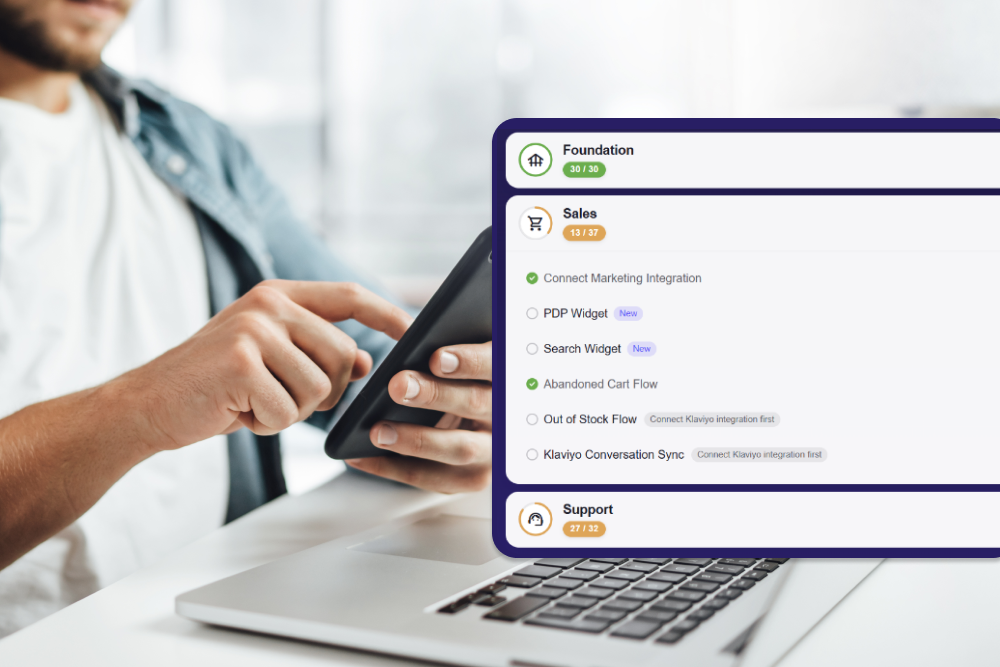
SaleSmartly product interface.
Every platform below was assessed against the same criteria, drawn from published product documentation, vendor pricing pages, and independent review data:
- Resolution depth: Does the AI close the request end-to-end, or does it deflect and hand off?
- Action-taking: Can the agent update records, process refunds, book appointments, or trigger workflows mid-conversation?
- Channel coverage: Email, live chat, social messaging, voice, and SMS handled with consistent quality.
- Agent productivity: Reply drafting, summarization, sentiment detection, and smart routing.
- Integrations and data control: CRM, ecommerce, and help desk connectors, plus permissions over what the AI can access.
- Time to live: Can a non-technical team deploy in weeks rather than quarters?
- Pricing transparency: Predictable costs, including per-resolution or per-seat AI charges.
Pricing figures reflect publicly listed starting rates at the time of writing and should be verified with each vendor before purchase.
The Top 10 AI Customer Service Software Products for 2026
Top 10 AI Customer Service Software Products 2026 - How to Choose the Right Platform.
1. Tidio
Best for: Ecommerce stores, service providers, and growing businesses that want AI automation without losing the human touch.
Tidio combines a conversational AI agent (Lyro) with live chat and help desk tools in one platform. Lyro is designed to solve up to 67% of customer problems in seconds by drawing on your help center and past conversations, while the live chat widget keeps instant engagement available when a human is needed. The help desk adds smart ticketing so multi-channel requests land in a single dashboard.
Tidio is trusted by over 300,000 businesses worldwide. A published case study with Cove Smart reported a 70% increase in self-service resolution, an 80% reduction in response times, and a 35% boost in customer satisfaction. A premium tier offers custom limits and expert support for higher-volume teams.
Standout feature: Lyro AI Agent with a live chat and help desk backbone. Considerations: Best suited to teams that prioritize chat and ecommerce workflows over complex enterprise ITSM.
2. Fin by Intercom
Best for: Chat-first and email-heavy support teams that want AI resolution inside a native helpdesk.
Fin is Intercom's AI customer service agent, sitting on top of one of the strongest native helpdesks in the category. It resolves conversations across chat, email, WhatsApp, SMS, social, and voice, drawing on your help center, past tickets, and knowledge base. Multi-step workflows run through its Procedures feature, allowing the agent to complete real tasks rather than recite articles.
Standout feature: End-to-end resolution across multiple channels with pay-per-outcome billing. Considerations: Intercom's resolution rates are self-reported, and real-world deployments often land below headline figures. Forecast conservatively and pilot before scaling.
3. Zendesk
Best for: Customer support teams handling multiple channels at scale.
Zendesk is a mature customer support suite covering email, chat, messaging, phone, mobile, and social media from one inbox. Its AI Agents answer common questions and complete set tasks, while Copilot summarizes tickets, suggests replies, and recommends next steps. Ticket routing distributes work based on skills, availability, and workload.
Standout feature: A large app marketplace and deep routing logic for complex teams. Considerations: Advertised plan prices may not reflect the final bill. Support seats, automated resolutions, Copilot, and phone usage are often charged separately.
4. Freshdesk
Best for: Small to mid-sized businesses seeking affordable AI-powered help desk tools.
Freshdesk brings Freddy AI across ticketing and self-service, covering AI triage, reply assistance, sentiment detection, and routing. It is a practical entry point for teams that want automation depth without enterprise complexity.
Standout feature: Accessible pricing with AI capabilities across the core help desk. Considerations: Advanced AI features may require add-ons, so calculate total cost against your ticket volume.
5. Ada
Best for: Enterprise teams needing large-scale, multilingual AI agent deployment with heavy compliance requirements.
Ada focuses on no-code enterprise self-service, with automation across more than 50 languages and a drag-and-drop builder. It is built for organizations that need to deploy AI agents at scale while meeting strict data and compliance standards.
Standout feature: Multilingual automation with enterprise-grade governance. Considerations: Pricing is custom and typically oriented toward larger organizations.
6. Gorgias
Best for: Ecommerce and Shopify-based brands needing AI agents built around order and storefront data.
Gorgias ties automation directly to the storefront, so AI agents can answer order-status questions, handle returns, and act on customer purchase history. It is a natural fit for merchants whose support volume is dominated by post-purchase inquiries.
Standout feature: Order-aware automation connected to ecommerce data. Considerations: Best value for ecommerce; less suited to non-retail service models.
7. HubSpot Service Hub
Best for: Teams already on HubSpot CRM that want service, sales, and marketing data unified.
HubSpot Service Hub brings AI assistance into a shared CRM environment, so support interactions inherit the same customer record used by sales and marketing. This reduces context-switching and improves personalization.
Standout feature: Unified customer data across departments. Considerations: The strongest value appears when HubSpot is already your CRM; standalone adoption may duplicate tools.
8. Zoho Desk
Best for: Budget-conscious teams already using Zoho CRM.
Zoho Desk offers Zia summaries, reply assistance, sentiment detection, tags, and AI agents at an accessible price point. It integrates naturally with the broader Zoho ecosystem.
Standout feature: Low entry cost with a broad feature set. Considerations: The AI depth may trail dedicated AI-first platforms for complex resolution workflows.
9. Kustomer
Best for: Enterprise teams requiring CRM-centric customer support workflows.
Kustomer centers support around the customer record rather than the ticket, which suits organizations that need a unified view of every interaction. AI assists with routing, summarization, and response generation.
Standout feature: CRM-centric data model for relationship-driven support. Considerations: Enterprise-oriented pricing and implementation.
10. Help Scout
Best for: Small and mid-sized teams wanting a simple shared inbox with lightweight AI assistance.
Help Scout provides AI Answers, AI Drafts, summaries, and reply assistance inside a clean shared inbox. It is a strong choice for teams that value simplicity over deep automation.
Standout feature: Ease of use with practical AI assistance. Considerations: Teams needing advanced agentic actions may outgrow it.
Comparison Table
Top 10 AI Customer Service Software Products 2026 - Comparison Table.
| Product | Best For | Standout AI Feature | Starting Price (USD) |
|---|---|---|---|
| Tidio | Ecommerce and growing businesses | Lyro AI Agent, live chat, help desk | Freemium; paid tiers available |
| Fin by Intercom | Chat-first resolution at scale | Pay-per-outcome AI agent | $0.99 per resolution plus Intercom seat |
| Zendesk | Multi-channel enterprise support | AI Agents and Copilot | From $19/agent/month (annual) |
| Freshdesk | SMB and mid-market help desks | Freddy AI across ticketing | From $18/agent/month |
| Ada | Enterprise multilingual self-service | 50+ language automation | Custom |
| Gorgias | Ecommerce and Shopify brands | Order-aware automation | From $10/month (Starter) |
| HubSpot Service Hub | HubSpot CRM users | Unified CRM AI assistance | Tiered by seat and contacts |
| Zoho Desk | Budget-conscious Zoho users | Zia summaries and AI agents | From $7/user/month (annual) |
| Kustomer | CRM-centric enterprise support | Customer-record-based AI | Custom |
| Help Scout | Small teams wanting simplicity | AI Answers and AI Drafts | From $25/user/month (annual) |
How to Choose the Right Platform

SaleSmartly product interface.
Start with your dominant channel
If most of your volume arrives through live chat and email, Fin by Intercom or Tidio will feel native. If phone support carries real weight, prioritize platforms with strong voice capabilities. If your business runs on messaging apps across borders, evaluate omnichannel platforms that unify WhatsApp, Messenger, Instagram, and similar channels.
Pressure-test pricing against real volume
Per-resolution and per-seat models behave very differently as volume grows. Model your expected monthly resolutions and seats before committing, and ask vendors how AI usage is metered.
Weigh resolution quality over deflection
A fast AI response that leaves the customer unresolved creates repeat contacts. Look for evidence of end-to-end resolution, action-taking, and clean human handoff with full conversation history.
Consider adjacent workflow needs
Some teams need capabilities that sit just outside core AI customer service software. For cross-border businesses that rely on WhatsApp, Messenger, and other messaging channels, an omnichannel communication platform such as SaleSmartly can complement a help desk by unifying messaging, adding real-time translation, and supporting message-based engagement. It is not part of this ranked list, but it is worth evaluating when your support workflow is messaging-first and spans multiple regions.
For a broader view of how AI-first platforms compare, see our Top 10 AI-First Customer Service Platforms 2026 and Top 10 Customer Communication Platforms 2026: Ranked & Tested. If you are weighing specific head-to-head options, our SaleSmartly vs HubSpot vs Tidio comparison breaks down omnichannel messaging, AI agents, and pricing side by side.
Related reading
- SaleSmartly vs HubSpot vs LiveChat: Which Fits in 2026? - Compare SaleSmartly, HubSpot, and LiveChat on omnichannel messaging, AI agents, CRM, translation, and pricing to pick the right platform for 2026.
Frequently Asked Questions
What is the best AI customer service software in 2026?
There is no single best product. Tidio suits ecommerce and growing businesses that want AI plus live chat. Fin by Intercom fits chat-first teams needing resolution at scale. Zendesk serves multi-channel enterprises. The right choice depends on your dominant channel, volume, and budget.
How much does AI customer service software cost?
Entry pricing ranges from around $7 to $55 per agent per month, with AI often charged separately. Per-resolution models such as Fin's $0.99 per outcome can be predictable for low volume but expensive at scale. Always model total cost against expected ticket volume.
Can AI fully replace human agents?
Not yet. Current platforms resolve a meaningful share of repetitive inquiries, but complex, emotional, or high-value cases still need human judgment. The strongest setups let AI handle routine volume and route edge cases to agents with full context.
What should I look for in an AI customer service platform?
Prioritize resolution depth, action-taking ability, channel coverage, integration with your CRM and help desk, data access controls, and transparent pricing. Pilot with real support requests before committing.
How do AI customer service tools handle multilingual support?
Platforms like Ada automate across more than 50 languages, while messaging-focused tools may offer real-time translation for cross-border conversations. If you support customers in multiple regions, test translation quality with your actual product terminology.
Conclusion
The AI customer service software market in 2026 rewards buyers who look past headline resolution rates and evaluate how a platform handles their specific channels, volume, and workflows. Tidio stands out for ecommerce teams wanting AI plus live chat in one place, Fin by Intercom for chat-first resolution at scale, and Zendesk for multi-channel enterprises. Whichever you choose, pilot with real tickets, model your costs carefully, and keep human agents in the loop for the cases that matter most. For messaging-first, cross-border operations, complementary tools like SaleSmartly can round out an omnichannel strategy alongside your core help desk.